




OSTATNIE WPISY
Pipe Materials Explained: Glass, Silicone, Wood, Metal
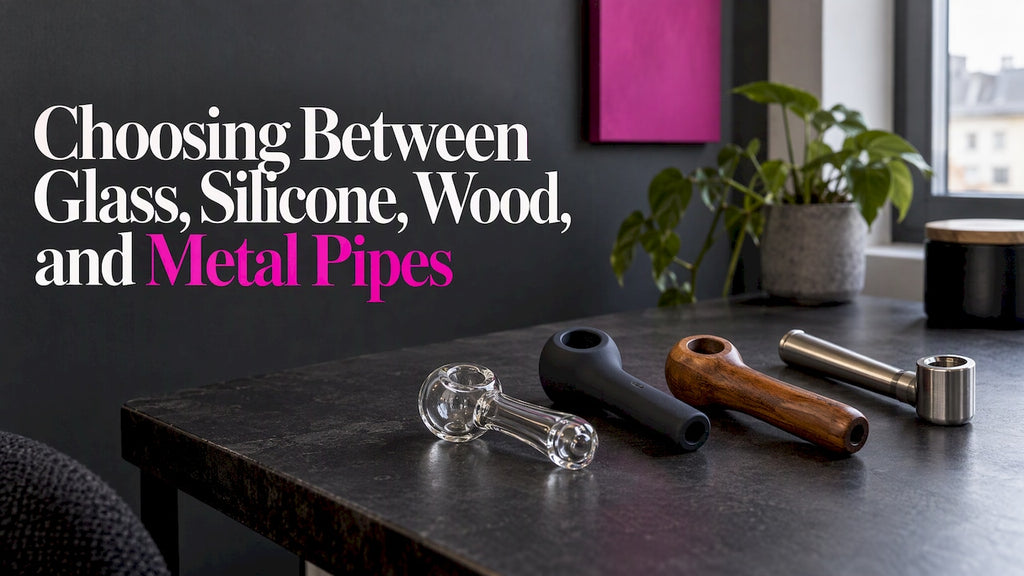
The material decides how a pipe or grinder feels, tastes, lasts and gets cleaned. Borosilicate glass suits taste and clean looks. Silicone suits travel and drops. Wood suits looks and a dry, cool draw. Anodized aluminum suits grinders. This guide compares each material by the points that matter at purchase, then shows which one fits which user.
Key Takeaways
- Glass is neutral in taste and easy to see through and clean. It needs care with impact and sudden temperature changes.
- Silicone is the pick for travel, kids-free households with pets, and anyone who drops things. It is flexible and hard to break.
- Wood and briar-type pipes add a dry, cool draw and a distinct look. They need dry cleaning, never soaking.
- For grinders, anodized aluminum is the standard choice. Plastic is a stopgap, wood is for looks, ceramic is a niche.
- Match the material to where, how often and how roughly you use the piece.
Table of Contents
- What “pipe material” covers
- Glass and borosilicate
- Silicone
- Wood and briar
- Metal
- Ceramic, stone and corn cob
- Material comparison table
- Grinder materials
- How to choose: match material to use
- Cleaning by material
- Our view on materials
- Shop by material and category
- FAQ
- Sources
What “pipe material” covers
The phrase means different things to different readers. Plumbing guides on this keyword cover PVC and copper. This guide covers the smoking side: hand pipes, water pipes (bongs), one hitters, dugouts and herb grinders. All of them are sold to adults only.
Four questions sort every material:
- Heat. How much heat reaches your hand and your lips, and does the material survive it?
- Taste. Does the material add or absorb anything?
- Durability and weight. What happens when it falls, and is it comfortable to carry?
- Cleaning. What dissolves residue, and what damages the material?
The sections below answer these for each material.
Glass and borosilicate
Glass is the most common material for bongs, bubblers and spoon pipes. Most good pieces use borosilicate, a glass type with low thermal expansion. Low expansion means the glass handles heat changes better than ordinary soda-lime glass. It is still glass: a hard knock breaks it.
Strengths
- Neutral in taste. Glass does not react with smoke, so flavor stays clean.
- Transparent. You see residue build up and know when to clean.
- Cleans well. Isopropyl alcohol and coarse salt remove most residue, and the surface does not hold smells.
- Wide range: simple spoons, beaker bongs, straight tubes, colored and heady pieces.
Care points
- Avoid abrupt extreme temperature changes, such as rinsing a hot bowl with ice water.
- Use a stable base and keep the piece away from table edges.
- Check joints and bowls for chips before use.
For water pipes, shape matters as much as material. The guides on airflow physics in straight tube and beaker bongs and choosing a bong bowl cover that part. If price is the question, are expensive bongs worth it explains what extra money buys in glass.
Example: the Session Goods Glass Bong is a glass water pipe for users who put taste first.

Silicone

Silicone is a flexible, rubber-like material. It became popular because it survives drops that destroy glass. Quality silicone pieces are usually built for everyday carrying.
Strengths
- Hard to break. Good for bags, pockets, cars, festivals and shared homes.
- Light. Easy to carry.
- Many designs have removable parts, which makes cleaning simple.
- Often lower in price than comparable glass.
Care points
- Keep flame away from the silicone body. Pieces with a glass or metal bowl keep the heat contact on the bowl, not on the body.
- Clean with isopropyl alcohol and warm water, then rinse and dry fully.
- Dark or glossy silicone shows less staining than clear silicone.
Examples: the Eyce Silicone Spoon Pipe is a durable hand pipe for carrying. The Eyce Beaker Silicone Bong brings the same material to a water pipe.
Wood and briar
Wood pipes cover two groups. Classic tobacco pipes use briar, a dense wood from the root burl of the heath tree. Modern hand pipes for dry herb often use hardwood bodies with a metal or glass bowl insert.

According to the International Pipe Society’s guide for first-time buyers, briar is the most common pipe material, it resists fire well, and its porous structure gives a dry, cool draw. The same guide names corn cob as the most recommended option for beginners who are still finding out whether they like a pipe, and meerschaum as usually a second pipe because it is fragile and its wax coating needs care.
Strengths
- Warm to hold. Wood does not conduct heat the way metal does.
- Dry, cool draw from wood’s natural absorption.
- Strong visual appeal. Each piece has its own grain.
Care points
- Never soak or run under water. Clean with dry methods such as pipe cleaners and soft cloths.
- Keep wood away from sources of moisture and sudden heat.
- Expect a gradual change in color and smell with use.
Example: the Bearded Circle Wood Pipe with Lid is a wood hand pipe with a lid for storage between sessions.
Metal
Metal pipes are common as one hitters, chillums, screens and bowls. Aluminum and stainless steel are the usual choices. Metal is strong and light, and it does not break when dropped.
Strengths
- Very durable. A drop leaves a dent at worst.
- Compact. Fits in a pocket or a dugout.
- Cleaning is easy: alcohol or a pipe cleaner.
Care points
- Metal conducts heat. The bowl end and the mouthpiece can get hot in use. Let the piece cool before handling it or putting it away.
- Taste can come across more metallic than glass.
- Replace mesh screens when they clog. The guide on pipe screen sizes shows how to measure the right fit.
For discreet carrying, see Dugouts & One Hitters.
Ceramic, stone and corn cob
These materials are less common but still appear in pipes.
- Ceramic and stone transmit more heat to the hand than wood or briar, according to maker guidance. They are valued for looks and neutral flavor and are heavier and more fragile than metal or silicone.
- Corn cob is light and cheap. It is less durable than briar, which is why the International Pipe Society guide above frames it as an entry option.
- Acrylic and ebonite are stem materials. Ebonite feels warmer and more natural in the mouth, acrylic lasts longer and cleans more easily.
Material comparison table
| Material | Heat handling | Taste | Durability | Weight | Cleaning |
|---|---|---|---|---|---|
| Borosilicate glass | Good, avoid thermal shock | Neutral | Breaks on impact | Medium to heavy | Easy, alcohol and salt |
| Silicone | Keep flame off the body | Neutral with quality grades | Very high, drop safe | Light | Easy, many parts come apart |
| Wood or briar | Dry, cool draw, warm to hold | Slight wood character | Medium | Light | Dry methods only |
| Metal | Conducts heat, gets hot | Can taste metallic | Very high | Light to medium | Easy |
| Ceramic or stone | Transmits more heat | Neutral | Fragile | Heavy | Moderate |
Grinder materials
Grinders face different demands than pipes. Heat is not an issue. Teeth, threads and residue are. The material decides how long the teeth stay sharp and how easily the grinder is cleaned.
- Anodized aluminum. The standard choice. It is light, hard enough to keep teeth sharp, and the smooth anodized coating makes sticky residue easier to remove. Build quality matters more than the alloy name: cheap, uncoated cast metal dulls fast.
- Stainless steel. Heavier and very durable. Good for daily heavy use.
- Titanium. Very durable and higher in price. A choice for buyers who want a long-term tool.
- Plastic. Low cost and light, but teeth can break and end up in the ground material. Fine as a stopgap while traveling.
- Wood. Chosen for looks. It needs dry cleaning only, and pegs tear rather than cut. Many wood models have no kief chamber.
- Ceramic. Neutral in taste and non-stick, but fragile and higher in price. A niche pick for flavor-focused users.
A well-built metal grinder has few wearing parts apart from the screen, so it lasts many years with normal use. Browse the full range under Herb Grinders.
How to choose: match material to use
Beginner, first piece. Start with silicone or a simple glass spoon pipe. Both are easy to clean and forgiving. Pair it with an anodized aluminum grinder.
Carry daily. Silicone or metal. Add a dugout or a storage container from Storage Products to keep things tidy.
Home use, taste first. Borosilicate glass. For water pipes, choose shape and bowl with the guides linked above.
Look and feel first. Wood, with a dry cleaning routine.
Shared household, small spaces. Silicone for breakage, plus Smoke Odor Control products for smell.
Flavor-focused, careful handling. Glass or ceramic, with a stable stand.
Quick checklist before buying:
- Where will it be used: home, bag, outdoors?
- How often: daily, weekly, occasionally?
- Is dropping likely?
- Do you want to rinse it under water, or wipe it dry?
- Is the budget for one piece or for a set?
For a wider view of pipe styles, read the guide to premium smoking pipes and the bong and water pipe buying guide.
Cleaning by material
- Glass: isopropyl alcohol and coarse salt, shake, rinse with lukewarm water. Dry before use.
- Silicone: alcohol and warm water. Remove all parts first. Rinse well.
- Wood: dry only. Pipe cleaners, soft cloth. No soaking.
- Metal: alcohol soak or pipe cleaner. Rinse and dry.
- Grinders: brush the teeth, clear the screen and thread, wipe with alcohol. Skip water on wood grinders.
Clean on a regular schedule. Residue builds up faster than most users expect, and it affects taste and airflow.
Our view on materials
At Insomnia Smoke, the range is built around one idea: every material has a job, and a broad selection lets each customer pick the right one.
Glass for taste. Silicone for carry and drops. Wood for looks. Metal for tools. Our catalog covers all of them, from brands such as Eyce, Session Goods and Kannastör, so a beginner and an experienced customer can both find a fit in one place.
We recommend choosing by use, not by trend. Decide where and how the piece will be used, then pick the material. Our knowledge base guides cover shape, bowls, screens and care, and our support team answers product questions.
Insomnia Smoke
Shop by material and category
Insomnia Smoke carries glass, silicone, wood and metal pieces from American, Canadian and European brands, with discreet international shipping, including EU and UK delivery promotions.

FAQ
Which pipe material is best for beginners?
Silicone and simple glass spoon pipes are the easiest starts. Silicone survives drops, and glass keeps taste clean and cleans quickly. Pick by where you will use it.
Does the pipe material change the taste?
Yes. Glass is neutral and does not react with smoke. Wood adds a slight character and a drier draw. Metal can taste more metallic. Silicone is neutral in quality grades.
What is the best grinder material?
Anodized aluminum is the standard for most users. It is light, keeps teeth sharp and cleans easily. Stainless steel and titanium suit heavy daily use. Plastic is a travel stopgap.
Can I clean a wood pipe with alcohol or water?
Wood needs dry cleaning. Use pipe cleaners and a soft cloth, and do not soak or rinse it. Water can damage the grain and finish.
Is borosilicate glass unbreakable?
No. Borosilicate handles heat changes better than ordinary glass, but a hard impact still breaks it. Use a stable surface and avoid extreme temperature swings.

