


PUBLICACIONES RECIENTES
La guía definitiva sobre balanzas de precisión: Elige la exactitud para tu ritual
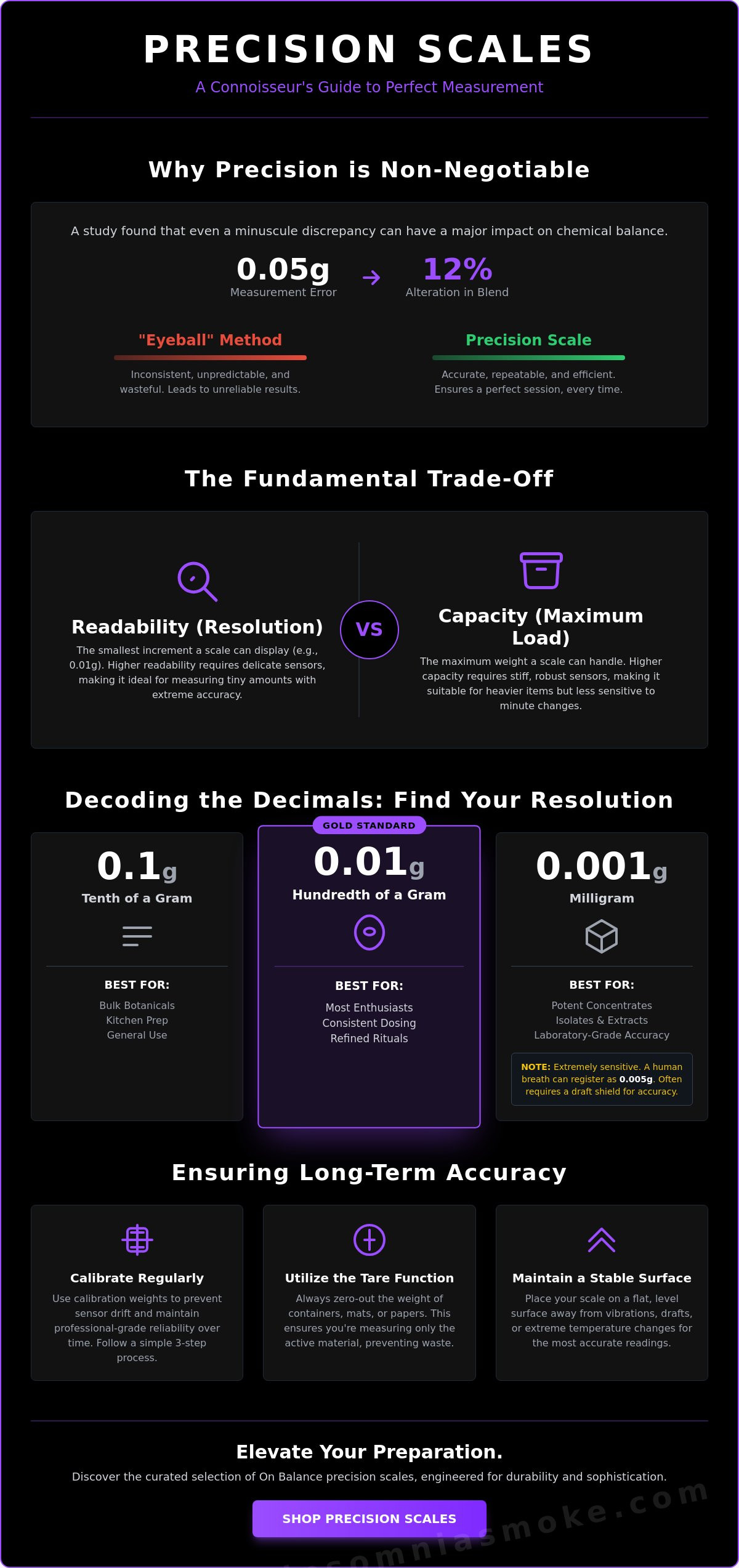
El pasado octubre, un estudio sobre la precisión de las mediciones encontró que incluso una discrepancia de 0.05g puede alterar el equilibrio químico de una mezcla botánica en casi un 12%. Probablemente hayas sentido esa frustración tú mismo cuando una balanza barata y sin marca parpadea entre números, dejándote adivinar el peso real de tus materiales premium. En
Quieres tener total confianza de que tus mediciones son exactas cada vez que entras en tu santuario. Esta guía te ayudará a descubrir cómo seleccionar la balanza de precisión perfecta para botánicos, concentrados o uso culinario, asegurando que cada medición sea confiable. Aclararemos las diferencias técnicas entre 0.01g y 0.001g requisitos y proporciona un proceso de calibración simple de tres pasos para mantener tu herramienta funcionando al máximo durante años. Prepárate para elevar tu preparación con la precisión que tu estilo de vida exige.
Puntos Clave
- Domina las distinciones técnicas entre legibilidad y capacidad para asegurar que tu equipo maneje tus mediciones específicas con total precisión.
- Descubre cómo seleccionar las balanzas de precisión perfectas evaluando tu necesidad de conveniencia móvil de bolsillo frente a la estabilidad de alta resolución de los modelos de banco.
- Aprende los rituales de mantenimiento esenciales y las técnicas de calibración necesarias para prevenir el desvío del sensor y mantener la fiabilidad de grado profesional con el tiempo.
- Explora la selección curada de
On Balance ingeniería, una marca sinónimo de la durabilidad y precisión requeridas para un ritual botánico sofisticado.
El Papel de las Balanzas de Precisión en el Ritual Moderno
Las balanzas de precisión son instrumentos sofisticados diseñados para medir masa con una legibilidad extrema, típicamente en un rango de 0.1g hasta 0.001g. Mientras que la historia de las balanzas se remonta a miles de años atrás con simples vigas de equilibrio, la tecnología moderna permite un nivel de precisión que antes estaba reservado para laboratorios de alta seguridad. Hoy en día, estas herramientas son esenciales para cualquiera que valore la consistencia en su oficio. Transforman una tarea simple en un proceso controlado y repetible que respeta los materiales que se están utilizando.
Confiar en el método de "a ojo" ya no es suficiente para el conocedor contemporáneo. Ya sea que estés equilibrando sabores delicados o manejando botánicos potentes, una desviación de solo 0.05g puede alterar toda la experiencia. Usar balanzas de precisión de alta calidad asegura que cada sesión sea segura y predecible. Este nivel de detalle te permite replicar resultados exitosos cada vez, convirtiendo un hábito en un ritual refinado de medición y descubrimiento.
Para entender mejor cómo funcionan estos dispositivos en pruebas del mundo real, mira este video útil:
Botánicos y Concentrados: Por qué los Miligramos Importan
Los extractos modernos a menudo alcanzan niveles de potencia que superan el 90% de pureza, lo que significa que incluso una pequeña fracción de un gramo tiene una fuerza inmensa. En este contexto, una resolución de 0.001g no es un lujo; es un requisito para la seguridad y la eficacia. El pesaje preciso permite a los usuarios gestionar su inventario con rigor profesional. Integrar estas herramientas con almacenamiento de alta gama como
Versatilidad Culinaria y de Laboratorio
Más allá del uso botánico, las balanzas de precisión sirven como la columna vertebral de la gastronomía molecular y la repostería especializada. Las recetas de alta gama a menudo requieren estabilizadores como goma xantana o agar-agar en cantidades tan pequeñas como el 0.2% del peso total. En entornos desordenados o de alta humedad, las balanzas lavables con clasificaciones IP65 proporcionan la durabilidad necesaria para soportar derrames y limpiezas frecuentes. Invertir en una balanza versátil y de alta calidad elimina la necesidad de múltiples herramientas inferiores que a menudo pierden calibración después de 120 días de uso regular. Un solo dispositivo confiable ofrece la tranquilidad de que tus mediciones son precisas, ya sea en una cocina o en un taller.
Entendiendo las Especificaciones: Legibilidad vs. Capacidad
Elegir el equipo adecuado requiere equilibrar dos métricas en competencia: legibilidad y capacidad. La legibilidad representa la resolución de tu medición. Si una balanza tiene una legibilidad de 0.01g, muestra el peso en incrementos de una centésima de gramo. La capacidad define la carga máxima que el dispositivo puede soportar. Estas dos especificaciones existen en un delicado equilibrio. Las balanzas de alta capacidad requieren sensores rígidos para manejar el peso, lo que las hace menos sensibles a cambios pequeños. Por el contrario, las balanzas de precisión altamente sensibles utilizan sensores delicados que pueden romperse si colocas un objeto pesado sobre ellas. Esta compensación es la razón por la cual una balanza diseñada para 5 kilogramos rara vez ofrece la misma resolución que una diseñada para 50 gramos.
Descifrando los Decimales: 0.1g, 0.01g, y 0.001g
Tu elección de lugares decimales dicta la precisión de tu ritual.Seleccionar la resolución incorrecta puede llevar a resultados inconsistentes o material desperdiciado.
- 0.1g (Décima de gramo): Mejor para hierbas a granel o preparación en la cocina. Este nivel de precisión es suficiente cuando una variación de 0.1g no alterará la experiencia.
- 0.01g (Centésima de gramo): El estándar de oro para la mayoría de los entusiastas. Ofrece la resolución perfecta para una dosificación consistente sin ser demasiado sensible a las vibraciones ambientales.
- 0.001g (Miligramo): Esencial para aislados y concentrados potentes. Estas balanzas a menudo incluyen un protector contra corrientes de aire porque incluso un aliento humano puede añadir 0.005g de presión a la bandeja.
Celdas de carga y tecnología de sensores
La mayoría de los dispositivos digitales utilizan sensores de galgas extensométricas. Aprender cómo funcionan las balanzas digitales revela por qué la colocación es crítica. Estos sensores miden la deformación mínima de una barra de metal bajo peso.Para funcionar correctamente, el dispositivo debe estar en una superficie nivelada y no porosa. Aunque muchas marcas premium incluyen protección contra sobrecarga, exceder la capacidad nominal sigue siendo la razón principal para el 85% de los fallos de las balanzas. La estabilidad de la batería también influye en el rendimiento. Cuando los niveles de energía caen por debajo de un cierto umbral, generalmente alrededor de 2.8 voltios para unidades AAA estándar, el sensor puede tener dificultades para proporcionar un punto cero consistente, lo que lleva a "desviaciones" en tus lecturas.
Encontrar el "Punto Ideal" implica ajustar tu volumen típico al rango medio de la balanza. Una balanza es generalmente más precisa cuando mide artículos que representan del 20% al 80% de su capacidad total. Si regularmente pesas 25 gramos de material, un modelo con una capacidad de 100g y una legibilidad de 0.01g proporciona la mejor estabilidad. Ofrece suficiente margen para evitar la tensión del sensor mientras mantiene una alta resolución.Descubre nuestra colección seleccionada de herramientas de pesaje premium para encontrar balanzas de precisión que se adapten a tus requisitos específicos.
Eligiendo Tu Perfil: Modelos de Bolsillo vs. de Banco y Miligramos
Elegir el perfil adecuado para tus balanzas de precisión depende de dónde se lleva a cabo tu ritual. Es una decisión entre la libertad de portabilidad y la estabilidad absoluta de una estación de escritorio. Las marcas de alta gama como
Mini y balanzas de bolsillo: Precisión en movimiento
Las balanzas de bolsillo representan el pináculo de la utilidad discreta. Estos modelos a menudo cuentan con tapas protectoras abatibles que cumplen una doble función. Cuando están cerradas, protegen la plataforma de pesaje y la pantalla retroiluminada de la presión; cuando están abiertas, actúan como una bandeja de expansión para artículos más grandes. Estos diseños "sigilosos" están diseñados para integrarse en una estética de estilo de vida moderno, asemejándose a teléfonos inteligentes o cuadernos pequeños. Son el compañero perfecto para el
- Calibración con un solo toque para reinicios rápidos en nuevos entornos.
- Pantallas retroiluminadas de alto contraste para visibilidad en condiciones de poca luz.
- Protección contra sobrecarga para evitar daños en el sensor en una bolsa llena.
Balanzas de Banco Compactas y de Miligramos: El Estándar de Escritorio
Las balanzas de banco estacionarias son la opción preferida para la precisión de grado de laboratorio. Cuando te adentras en el territorio de las lecturas de miligramos, incluso una ligera brisa puede causar una fluctuación de 0.001g. Las balanzas de miligramos profesionales incluyen un protector contra corrientes de aire, que es un recinto transparente que aísla la plataforma de las corrientes de aire. A diferencia de los modelos de bolsillo dependientes de baterías, las balanzas de banco suelen ofrecer opciones de alimentación AC/DC. Esto asegura una corriente constante, lo cual es vital para mantener el calor del sensor y la consistencia durante sesiones largas. Las balanzas de banco con plataforma grande también son superiores para tareas de pesaje a granel, a menudo manejando capacidades de hasta 500g o más sin sacrificar sensibilidad. Proporcionan una base más amplia que elimina los riesgos de vuelco asociados con dispositivos más pequeños y ligeros.
Los conocedores profesionales rara vez se limitan a un solo dispositivo.A menudo poseen tanto un modelo portátil para entornos sociales como una balanza de banco dedicada para su espacio de trabajo en casa. Esta configuración dual asegura que las balanzas de precisión estén siempre disponibles para validar la calidad de su colección botánica. Descubre la diferencia que un entorno de pesaje estable y dedicado hace para tus mediciones más delicadas. Al invertir en ambos factores de forma, aseguras que la precisión siga siendo una parte constante de tu ritual, sin importar tu ubicación.
Mantenimiento y Calibración: Asegurando la Precisión a Largo Plazo
Incluso las balanzas de precisión más premium eventualmente experimentan desviaciones. Esto no es un defecto; es una realidad de la metrología de alta gama. Las celdas de carga son instrumentos sensibles que responden a cambios en la gravedad, la presión atmosférica e incluso la elevación geográfica. Para mantener estándares profesionales, debes realizar recalibraciones manuales usando pesas externas.Confiar únicamente en la configuración de fábrica lleva a errores incrementales que comprometen la consistencia de tu ritual.
La precisión muere en entornos inestables. Una corriente de aire de una ventana abierta o las vibraciones de un refrigerador cercano pueden hacer que una balanza de 0.01g fluctúe enormemente. La interferencia electromagnética es otro asesino silencioso. Mantener un teléfono inteligente a menos de 50 cm de tu dispositivo puede introducir ruido electrónico que distorsiona las lecturas. Siempre opera tu balanza en una superficie sólida y nivelada, lejos de corrientes de aire y dispositivos electrónicos para asegurar que el sensor permanezca neutral.
Los protocolos de limpieza son vitales para la longevidad. La acumulación de residuos en la plataforma añade peso fantasma y puede filtrarse en la carcasa interna. Usa un paño de microfibra para el exterior y un cepillo de cerdas suaves para eliminar partículas finas de la bandeja de pesaje. Nunca apliques presión hacia abajo al limpiar. La celda de carga es un resorte delicado; presionar demasiado fuerte puede causar daños mecánicos permanentes.
El Proceso de Calibración Paso a Paso
Las secuencias de calibración varían, pero la mayoría de los
Almacenamiento y Cuidado de la Batería
Nunca almacenes objetos en la plataforma de pesaje. La presión constante lleva a un fenómeno llamado "creep," que deforma permanentemente la celda de carga y arruina la precisión. La temperatura también juega un papel significativo. Intenta almacenar tu equipo en un ambiente estable alrededor de 20 grados Celsius.El calor extremo hace que los componentes metálicos se expandan, mientras que el frío los hace contraer, lo que altera la sensibilidad de los sensores. Reemplace sus baterías cada 6 meses o tan pronto como aparezca un indicador de bajo voltaje. Las baterías débiles causan "desviación de bajo voltaje", lo que lleva a que la pantalla fluctúe incluso cuando la plataforma está vacía.
Proteja su inversión y mantenga la integridad de sus mediciones con las herramientas adecuadas.
Descubra nuestra selección de herramientas de pesaje premium
Descubra la On Balance Colección en Insomnia Smoke
En
Para el entusiasta móvil, la serie Mini Scale ofrece una solución compacta que cabe fácilmente en un bolsillo o kit de viaje. Estos dispositivos no comprometen el rendimiento a pesar de su pequeño tamaño. Si tus necesidades son más especializadas, nuestra gama Milligram ofrece precisión profesional para requisitos botánicos. Estas balanzas proporcionan sensibilidad hasta 0.001g, permitiendo la medición meticulosa de extractos potentes o hierbas raras. Hemos curado esta selección para simplificar tu proceso de compra. En lugar de buscar entre cientos de opciones mediocres, puedes elegir de una lista refinada de herramientas de alta calidad que funcionan exactamente como se promete.
Modelos Destacados para Cada Requisito
La
-
On Balance Serie NV: Cuenta con una gran plataforma de acero inoxidable y una pantalla retroiluminada brillante para facilitar la lectura en cualquier iluminación. -
On Balance Myco : Ofrece una garantía limitada de 10 años, demostrando la confianza de la marca en sus componentes internos. - Balanzas de Lavado y de Banco: Estas herramientas robustas están diseñadas para el exigente chef casero o el coleccionista serio que necesita pesar cantidades mayores con absoluta certeza.
Estos modelos representan la cúspide de la tecnología de pesaje.Proporcionan la estabilidad necesaria para asegurar que tus mediciones nunca se vean afectadas por vibraciones externas o corrientes de aire menores.
Completa Tu Configuración
Una balanza de alta calidad es solo un componente de una configuración sofisticada. Deberías considerar emparejar tu nuevo dispositivo con soluciones de almacenamiento premium como el
Si estás planeando un viaje, es útil entender las últimas reglas respecto a tu equipo. Puedes encontrar información detallada en nuestra guía sobre vapes en un avión. Estar informado es parte de ser un entusiasta responsable. La precisión no es solo sobre el ritual; es sobre la tranquilidad. Descubre nuestra gama completa de balanzas de precisión hoy y experimenta la diferencia que el equipo de grado profesional hace en tu proceso de preparación.
Eleva Tu Estándar de Precisión
Lograr un ritual perfecto requiere más que intuición; exige la fiabilidad técnica que se encuentra en balanzas de precisión de alta calidad. Tu elección entre un modelo de miligramo con legibilidad de 0.001g o una balanza de banco de alta capacidad influye directamente en la consistencia de tus resultados. El mantenimiento profesional sigue siendo vital. Realizar una verificación de calibración cada 30 días asegura que tu dispositivo se mantenga dentro de sus niveles de tolerancia previstos.
Compra la Colección de Básculas de Precisión Curada
Preguntas Frecuentes
¿Cuál es la diferencia entre una báscula de precisión y una báscula de cocina?
Las básculas de precisión ofrecen incrementos de 0.1g o 0.01g, mientras que las básculas de cocina generalmente miden en pasos de 1g o 5g. Una báscula de cocina estándar carece de la sensibilidad requerida para botánicos de menos de 10 gramos. El equipo profesional utiliza celdas de carga diseñadas específicamente para micro-mediciones. Esto asegura precisión dentro de un margen de error del 0.01%. Descubre la diferencia que hacen los sensores de alta calidad en tu ritual diario.
¿Realmente necesito una báscula de miligramos (0.001g) para botánicos?
Necesitas una balanza de miligramos si tu ritual involucra extractos potentes o mediciones por debajo de 50mg. Las balanzas estándar a menudo no registran pesos por debajo de 0.1g con precisión. Los sensores de alta calidad de 0.001g proporcionan la resolución necesaria para una dosificación precisa y resultados consistentes. La mayoría de los conocedores prefieren este nivel de detalle para mantener la excelencia en cada sesión. No dudes en contactarnos para recomendaciones de modelos específicos.
¿Con qué frecuencia debo calibrar mi balanza de precisión?
Calibra tu balanza cada 30 días o después de moverla a una nueva ubicación para mantener un rendimiento óptimo. Cambios de temperatura ambiente de 5 grados pueden afectar los componentes internos sensibles. Usa un peso de calibración certificado para asegurar que el sensor lea correctamente cada vez. El mantenimiento regular mantiene tu dispositivo funcionando al nivel premium que esperas de marcas de primera como
¿Por qué mi báscula muestra diferentes pesos para el mismo artículo?
Las corrientes de aire, las vibraciones de la superficie y los niveles bajos de batería causan lecturas inconsistentes para el mismo artículo. Una brisa de 2 mph o una mesa desigual afecta significativamente la sensibilidad de la celda de carga. Siempre coloca tu dispositivo en una superficie estable y plana, lejos de ventiladores o ventanas abiertas. Esto elimina la interferencia externa y restaura la fiabilidad de tus básculas de precisión para una medición perfecta cada vez.
¿Puedo usar mi teléfono como una báscula de precisión con una aplicación?
No, las pantallas de los teléfonos inteligentes no pueden funcionar como básculas de precisión precisas porque carecen de los sensores físicos de celda de carga necesarios. Las aplicaciones utilizan la función 3D Touch o acelerómetros, que proporcionan datos inconsistentes. Estas herramientas digitales carecen del hardware necesario para una precisión profesional. Confiar en el software para mediciones delicadas a menudo lleva a errores que superan el 20 por ciento.Compra hardware dedicado para asegurar que tu ritual se mantenga preciso.
¿Qué hace realmente el botón "Tare"?
El botón "Tare" reinicia la balanza a cero mientras un contenedor vacío está en la plataforma. Esto te permite medir solo el contenido sin incluir el peso de la bandeja o el frasco. Es una herramienta fundamental para organizar tu ritual con absoluta precisión. Simplemente coloca tu recipiente, presiona tare y luego añade tus materiales. Esta función es estándar en el 95% de los modelos digitales de alta calidad.
¿Son mejores las balanzas digitales que las mecánicas?
Las balanzas digitales son superiores para el uso moderno porque proporcionan resultados instantáneos y fáciles de leer con una resolución mucho más alta. Las balanzas mecánicas requieren ajuste manual y tardan 10 segundos o más en estabilizarse. Los modelos digitales ofrecen características esenciales como apagado automático y cambio de unidades. La mayoría de las marcas premium ahora se enfocan exclusivamente en la tecnología digital por su tasa de precisión del 99.9%. Descubre nuestra selección curada de dispositivos digitales de alto rendimiento.
¿Qué pasa si pongo algo demasiado pesado en mi báscula?
Colocar un artículo que excede la capacidad máxima puede dañar permanentemente la celda de carga interna y anular tu garantía. La mayoría de las básculas muestran un mensaje de error "O-Ld" cuando el peso supera el límite en un 5 por ciento. Esta tensión física dobla el sensor, lo que lleva a inexactitudes permanentes. Siempre verifica la capacidad antes de colocar objetos pesados en la plataforma delicada. Maneja tu equipo premium con cuidado.

