


NEUESTE BEITRÄGE
Wie reinigt man ein Glas Bong mit Haushaltsgegenständen?
Warum sollten Sie ein $500 teures, handgefertigtes Glas mit aggressiven, industriellen Lösungsmitteln behandeln, die einen bitteren chemischen Nachgeschmack hinterlassen? Wahrscheinlich haben Sie in Ihre Sammlung wegen ihrer überlegenen Handwerkskunst und der Reinheit des Erlebnisses investiert, das sie bietet. Lassen Sie nicht zu, dass vernachlässigte Pflege Ihre Investition trübt. Untersuchungen legen nahe, dass bereits nach nur drei Sitzungen der Harzaufbau beginnt, die empfindlichen Terpenprofile Ihrer legalen Kräuter erheblich zu beeinträchtigen. Zu lernen, wie man ein Glas Bong mit Haushaltsgegenständen reinigt, ist der effektivste Weg, um diese erstklassige Ästhetik zu bewahren und sicherzustellen, dass jeder Zug sauber, sicher und frisch bleibt.
Wir stimmen zu, dass ein trübes, geruchsintensives Stück das verfeinerte Ritual, das Sie kultiviert haben, ruiniert. Ein Branchenbericht aus dem Jahr 2023 hob hervor, dass 82% der Enthusiasten jetzt ungiftige Reinigungsalternativen bevorzugen, um die Risiken im Zusammenhang mit flüchtigen organischen Verbindungen zu vermeiden.Dieser Leitfaden verspricht, Ihnen zu helfen, die Kunst zu meistern, Ihr Glasgeschirr mit präzisen Techniken und einfachen Vorratskammer-Grundnahrungsmitteln auf einen Boutique-Standard-Glanz zu bringen. Entdecken Sie die genauen Rührmethoden und das Salz-zu-Säure-Verhältnis, die erforderlich sind, um Kalkflecken und hartnäckiges Harz zu beseitigen und Ihr Stück in seine ursprüngliche, fabrikklare Brillanz zurückzuversetzen.
Wichtige Erkenntnisse
- Verstehen Sie die chemische Zusammensetzung von Harz, um zu meistern, wie man ein Glas Bong mit Haushaltsgegenständen wie destilliertem Essig und Meersalz reinigt.
- Lernen Sie eine professionelle Demontage- und Spülsequenz, die sicherstellt, dass jede Komponente Ihres hochwertigen Glasgeschirrs eine Boutique-Standard-Tiefenreinigung erhält.
- Entdecken Sie spezialisierte Tricks mit Zitrusfrüchten und sprudelnden Vorratskammer-Grundnahrungsmitteln, um die Geschmacksreinheit wiederherzustellen und hartnäckige, organische Gerüche zu beseitigen.
- Adoptieren Sie eine anspruchsvolle Nachreinigungsphilosophie, um Mineralablagerungen zu verhindern und den langfristigen Glanz Ihrer Sammlung zu bewahren.
Die Wissenschaft des Harzes: Warum Haushaltsgegenstände funktionieren
Harz ist eine hartnäckige, lipophile Substanz, die sich mit extremer Hartnäckigkeit an Glasoberflächen bindet. Dieses unpolare organische Material widersteht vollständig Wasser, was eine Standardspülung für eine gründliche Reinigung unwirksam macht. Das Verständnis der chemischen Eigenschaften von Isopropylalkohol hilft zu erklären, warum es der Industriestandard bleibt, obwohl gängige Vorratskammer-Grundnahrungsmittel leistungsstarke Alternativen bieten. Zu lernen, wie man ein Glas Bong mit Haushaltsgegenständen reinigt, beginnt mit der Erkenntnis, dass Harz im Wesentlichen ein kohlenstoffbasierter Klebstoff ist, der eine spezifische molekulare Intervention erfordert, um sich aufzulösen. Die Löslichkeit von Harz in Haushaltsäuren wird durch die Fähigkeit der Säure bestimmt, die unpolaren organischen Bindungen durch Protonierung zu destabilisieren.
Um dieses Konzept besser zu verstehen, sehen Sie sich dieses hilfreiche Video an:
Polare vs. unpolare Lösungsmittel in Ihrer Küche
Wassermoleküle sind polar, was bedeutet, dass sie eine Ladung tragen, die Harz einfach ignoriert. Cannabis-Konzentrate sind hydrophob und erfordern ein unpolares oder saures Lösungsmittel, um den Aufbau effektiv aufzulösen. Während Alkohol mit hohem Prozentsatz für viele die bevorzugte Wahl ist, enthält weißer Essig 5% Essigsäure, die die notwendige chemische Reaktion bietet, um organische Schichten abzutragen. Zitronensaft bietet einen ähnlichen Vorteil mit seinem Gehalt an Zitronensäure, der effektiv durch die Öle schneidet, die Gerüche einfangen. Ein Vorwaschen mit Wasser, das auf genau 130 Grad Fahrenheit erhitzt wurde, macht das Harz weicher und macht es 40% anfälliger für die folgenden Reinigungsmittel. Diese Temperatur ist hoch genug, um Fette zu schmelzen, aber niedrig genug, um einen thermischen Schock für Ihr hochwertiges Glas zu vermeiden.
Die abrasive Komponente: Salz vs. Reis
Chemische Lösungsmittel benötigen mechanische Unterstützung, um jede Ecke eines komplexen Perkolators zu erreichen. Salz dient als halb-lösliches Schleifmittel und bietet die notwendige Reibung, um Ablagerungen zu lösen, ohne die strukturelle Integrität des Glases zu gefährden. Grobes koscheres Salz, mit Körnern von durchschnittlich 3 mm Durchmesser, funktioniert am besten für Standard-Glasröhren, da die Kanten lange genug scharf bleiben, um zu schrubben. Für komplexe Kammern, in denen Salz in einer wasserbasierten Lösung zu schnell auflösen könnte, wirkt trockener Reis als unlösliche Alternative. Die Auswahl der richtigen Korngröße stellt sicher, dass Sie tief in die Basis gelangen können, während Sie genug Kraft aufrechterhalten, um die Innenwände sauber zu schrubben. Zu wissen, wie man ein Glas Bong mit Haushaltsgegenständen reinigt, erfordert das Ausbalancieren dieser chemischen und physikalischen Kräfte, um Ihr Stück in seine ursprüngliche Klarheit zurückzuversetzen.
- Grobes Salz: Am besten für starke Ablagerungen in Glas mit großem Durchmesser.
- Speisesalz: Ideal für dünne Downstems und kleine Ritzen.
- Ungekochter Reis: Perfekt für mehrkammerige Perkolatoren, bei denen Salz verstopfen könnte.
Das unverzichtbare Vorratswerkzeug für die Glaspflege
Ein makelloses Finish auf deinem Lieblingsstück zu erzielen, erfordert keine aggressiven Industriesolventien. Du kannst lernen, wie man ein Glas Bong mit Haushaltsgegenständen reinigt, indem du eine Auswahl hochwertiger Zutaten aus deiner Küche zusammenstellst. Dieser Ansatz bewahrt die Integrität deines Glases und sorgt für ein sauberes, unverfälschtes Geschmacksprofil für dein nächstes Ritual.
Weißer destillierter Essig: Dieses Grundnahrungsmittel enthält typischerweise 5% Essigsäure. Es wirkt als starkes Lösungsmittel, das die durch hartes Wasser hinterlassenen Kalzium- und Magnesiumablagerungen auflöst. Wenn dein Glas trüb aussieht oder weiße Flecken zeigt, ist Essig die professionelle Wahl, um die vollständige Klarheit wiederherzustellen.
Grobes Meersalz oder koscheres Salz: Denken Sie an Salz als Ihre mechanische Scheuerbürste. Die großen, gezackten Kristalle von koscherem Salz bieten die notwendige Reibung, um dicke Harzablagerungen zu durchdringen. Diese Körner sind robust genug, um den Rührvorgang zu überstehen, ohne zu schnell zu lösen, was sie dem normalen Tafelsalz überlegen macht.
Backpulver: Natriumbicarbonat, mit einem pH-Wert von etwa 8,3, ist ein hervorragendes alkalisches Deodorant. Es neutralisiert die sauren Gerüche, die mit starkem Gebrauch verbunden sind. Es dient auch als mildes Schleifmittel zum Polieren des Äußeren und der empfindlichen Joints Ihres Stücks, ohne Kratzer zu hinterlassen.
Zitronensaft: Frischer Zitronensaft bringt Zitronensäure und natürliche Enzyme in Ihre Reinigungsroutine ein. Diese Komponenten wirken, um hartnäckige Öle zu emulgieren und einen frischen, botanischen Duft zu verleihen. Die Verwendung von natürlichem Zitrus stellt sicher, dass Sie die künstlichen chemischen Gerüche vermeiden, die in vielen Massenmarkt-Reinigern zu finden sind.
Die Sekundärwerkzeuge, die Sie bereits besitzen
Präzision ist entscheidend bei der Pflege von Premium-Glaswaren. Verwenden Sie ungekochten Reis als Agitator für komplexe Perkolatoren, in denen Salzkristalle stecken bleiben könnten. Für die Detailreinigung von Downstems und Bowls sind hochwertige Wattestäbchen und Pfeifenreiniger unverzichtbar. Wenn Sie bereit sind, das Stück zu schütteln, verwenden Sie Frischhaltefolie, die mit Gummibändern gesichert ist, um eine temporäre Abdichtung zu schaffen. Dies verhindert Lecks und ermöglicht die kräftige Bewegung, die erforderlich ist, um zu lernen, wie man ein Glas Bong effektiv mit Haushaltsgegenständen reinigt.
Was zu vermeiden ist: Gefährliche Haushaltsmythen
Sicherheit muss während des Wartungsprozesses Ihre oberste Priorität bleiben. Verwenden Sie niemals Bleichmittel oder ätzende Abflussreiniger an Ihrem Rauchzubehör. Diese Substanzen sind hochgiftig und hinterlassen unsichtbare Rückstände, die gefährlich einzuatmen sind. Es ist wichtig, Haushaltschemikalien sicher zu handhaben und ihre potenziellen Reaktionen zu verstehen.
Vermeiden Sie den häufigen Fehler, Ihr Bong zu kochen, um Harz zu entfernen. Schnelle Temperaturänderungen verursachen thermischen Schock; dies führt zu mikroskopischen Rissen oder sofortigem strukturellem Versagen selbst bei bestem Borosilikatglas. Schließlich sollten Sie duftende Geschirrspülmittel meiden. Sie hinterlassen oft einen hartnäckigen chemischen Film, der das empfindliche Geschmacksprofil Ihrer legalen Kräuter ruiniert. Um ein wirklich professionelles Setup zu erhalten, entdecken Sie Premium-Glasaccessoires , die für Langlebigkeit und einfache Pflege entwickelt wurden.
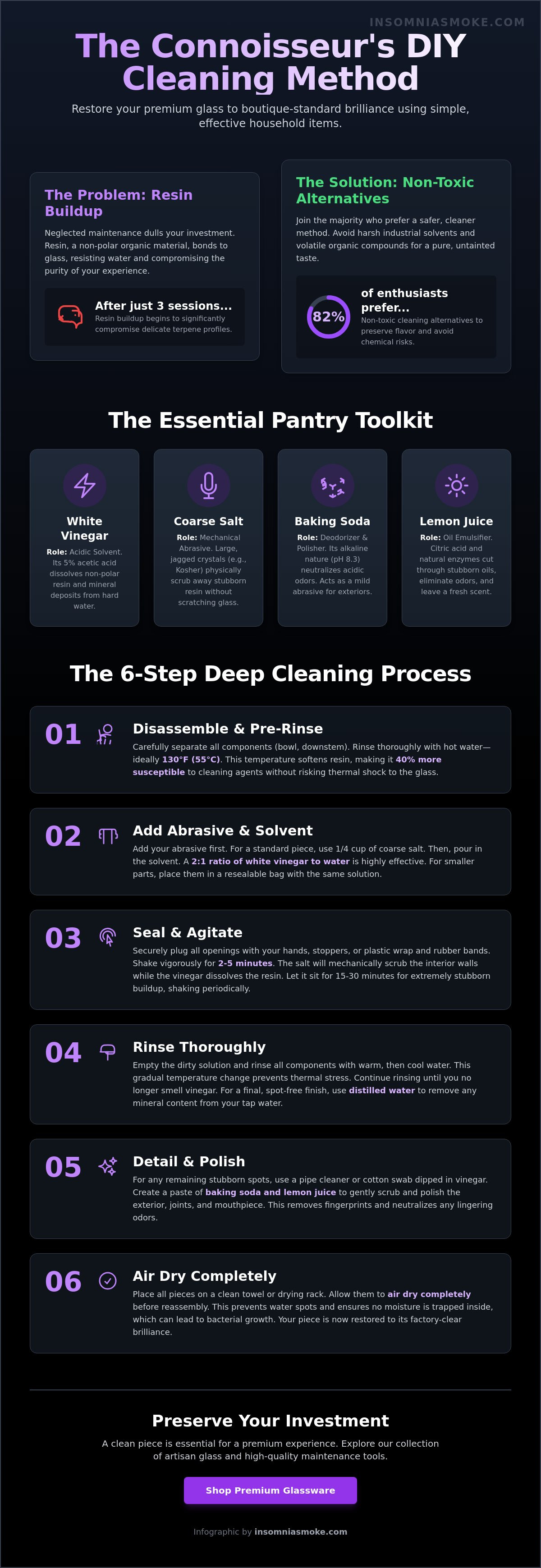
Schritt-für-Schritt: Die DIY-Reinigungsmethode für Kenner
Die Pflege eines hochwertigen Glasstücks ist ein Ritual, das sowohl den Geschmack Ihres Krauts als auch die Ästhetik Ihrer Sammlung bewahrt. Ein systematischer Ansatz stellt sicher, dass Sie alle Harzspuren entfernen, ohne die strukturelle Integrität des Glases zu beeinträchtigen.Folgen Sie dieser professionellen Abfolge, um zu lernen, wie man ein Glas Bong mit Haushaltsgegenständen reinigt und dabei ein showroom-reifes Finish erzielt.
Vorbereitung Ihres Arbeitsbereichs und Glases
Richten Sie eine spezielle Reinigungszone ein, bevor Sie beginnen. Legen Sie eine SiliKegelmatte oder ein dickes Mikrofasertuch auf Ihre Arbeitsplatte, um eine weiche Landefläche zu schaffen. Diese einfache Vorsichtsmaßnahme verhindert 90% der versehentlichen Absplitterungen, die durch Kontakt mit harten Granit- oder Porzellanoberflächen verursacht werden. Leeren Sie das gesamte abgestandene Wasser und entsorgen Sie lose Asche aus der Schale. Für den ersten Spülgang verwenden Sie Wasser, das auf genau 113°F (45°C) erhitzt wurde, um hartnäckiges Harz effektiv zu erweichen, ohne das Glas extremem thermischen Schock auszusetzen.
- Schritt 1: Die vorläufige Heißwasserspülung. Spülen Sie das gesamte Stück 120 Sekunden lang mit warmem Wasser. Dieser erste Durchgang entfernt lose Oberflächenverschmutzungen und bereitet das Harz auf das Lösungsmittel vor. Lernen wie man ein Bong richtig reinigt, erfordert diesen grundlegenden Schritt, um die Effizienz Ihrer Reinigungsmittel zu maximieren.
- Schritt 2: Komponentenzerlegung. Entfernen Sie den Kopf und den Downstem. Platzieren Sie diese kleineren Komponenten in einzelnen Glasgefäßen oder verschließbaren Beuteln. Die separate Behandlung verhindert, dass sie während der Schüttelphase gegen die Hauptkammer stoßen.
- Schritt 3: Die Infusion. Gießen Sie 150 ml weißen Essig oder Zitronensaft in die Basis. Fügen Sie 3 Esslöffel grobes Meersalz hinzu. Das Salz wirkt als physischer Schrubber, der sich im sauren Lösungsmittel nicht auflöst und die notwendige Reibung für eine gründliche Reinigung bietet.
- Schritt 4: Das Schüttelritual. Verschließen Sie die Öffnungen mit speziellen SiliKegel Stopfen oder Ihren Händen. Bewegen Sie die Mischung mit kontrollierten Bewegungen durch das Stück, um sicherzustellen, dass das Salz jede innere Oberfläche erreicht.
- Schritt 5: Die endgültige Spülung.Spülen Sie das Stück dreimal mit warmem Wasser. Dies entfernt alle Spuren des Lösungsmittels und Salzes. Beenden Sie mit einem letzten Spülen mit destilliertem Wasser, um Wasserflecken zu vermeiden, und lassen Sie das Stück dann auf Ihrer weichen Matte an der Luft trocknen.
Die Shake-Methode sicher ausführen
Präzision ist entscheidend beim Umgang mit Premium-Glas. Wenn Sie ein Session Goods Glas Bong oder ähnliche Designerstücke reinigen, greifen Sie den dicksten Teil des Bodens und des Halses. Vermeiden Sie es, seitlichen Druck auf das Joint auszuüben, wo der Downstem eingesetzt wird, da dies ein häufiger Stresspunkt ist. Verwenden Sie eine "Kreisförmige Wirbel"-Bewegung für Bongs mit komplizierten Baum- oder Wabenperkolatoren. Diese Zentrifugalkraft treibt das Salz effektiver durch die kleinen Lücken im Filtersystem als ein Standardshake.
Für gerade Röhren oder einfache Becher sorgt ein "Vertikales Schütteln" für den notwendigen Aufprall, um starke Ablagerungen zu lösen.Wenn Sie auf tiefsitzende Mineralflecken oder "Bloom" stoßen, überstürzen Sie den Prozess nicht. Lassen Sie die Essiglösung volle 30 Minuten einwirken, bevor Sie mit der Bewegung beginnen. Diese Geduld ist das Geheimnis, wie man ein Glas Bong mit Haushaltsgegenständen reinigt und dabei die Klarheit der ursprünglichen Handwerkskunst bewahrt. Wenn das Glas klar aussieht, haben Sie das Ritual des Kenners erfolgreich abgeschlossen.
Spezialisierte Tricks für hartnäckige Flecken und Gerüche
Normales Schrubben stellt nicht immer den Ausstellungsraumglanz eines Premiumstücks wieder her. Wenn Sie beherrschen, wie man ein Glas Bong mit Haushaltsgegenständen reinigt, spezialisierte Reaktionen bieten die besten Ergebnisse. Die "Sprudelnde" Methode nutzt eine kräftige chemische Reaktion zwischen Backpulver und weißem Essig. Dies erzeugt Kohlendioxidblasen, die Harz von der Glasoberfläche in schwer zugänglichen Ecken physisch abheben.Für ein zitrusfrisches Finish kombinieren Sie konzentrierten Zitronensaft mit grobem Salz. Die Zitronensäure löst hartnäckige Öle, während das Salz als sanftes Schleifmittel wirkt. Diese Kombination stellt die Terpenklarheit wieder her und sorgt dafür, dass Ihr Glas wie neu aussieht und schmeckt.
Hartwasserflecken, oft als "trübes Glas" bezeichnet, entstehen, wenn sich Mineralien wie Kalzium und Magnesium im Laufe der Zeit an der Oberfläche binden. Diese weißen, trüben Flecken widerstehen normaler Seife und Wasser. Ein 45-minütiges Einweichen in warmem weißen Essig löst diese Mineralbindungen effektiv. Spülen Sie nach dem Einweichen immer mit destilliertem Wasser, um zu verhindern, dass sich während des Trocknens neue Flecken bilden. Dieser einfache Schritt sorgt dafür, dass Ihr hochwertiges Glas transparent und professionell aussieht.
Tiefenreinigung komplexer Perkolatoren
Honigwaben- und Baumperkolatoren haben enge Lücken, in denen herkömmliches Salz zu schnell aufgelöst werden könnte, um effektiv zu sein. Verwenden Sie stattdessen trockenen weißen Reis.Es bewahrt seine strukturelle Integrität und bietet die notwendige Reibung, um innere Kammern zu reinigen. Die Anwendung dieser Methoden zeigt Ihnen genau wie man ein Glas Bong mit Haushaltsgegenständen reinigt, ohne die Integrität empfindlicher Perkolatoren zu beeinträchtigen. Für flache, zugängliche Oberflächen ist der "magnetische" Trick ein echter Game-Changer. Lassen Sie ein kleines Stück Schwamm mit einem winzigen Magneten im Inneren in das Bong fallen. Verwenden Sie einen zweiten Magneten an der Außenseite, um den Schwamm über das Glas zu führen. Ein abschließendes Spülen mit Zitronensaft neutralisiert jeden verbleibenden Essiggeruch und hinterlässt das Glas professionell poliert.
Geruchsmanagement für das moderne Zuhause
Ein gepflegtes Umfeld zu erhalten bedeutet, Luftreinheit ebenso zu priorisieren wie die Pflege der Ausrüstung. Das Reinigen des Glases ist nur 50% des Kampfes gegen anhaltende Gerüche. "Bong Atem" kann sich innerhalb von 20 Minuten nach einer Sitzung in Stoffen und Teppichen festsetzen und eine abgestandene Atmosphäre schaffen. Professionelle Enthusiasten verlassen sich auf Ozium Air Sanitizer Spray, um luftgetragene Bakterien und Rauchgerüche auf molekularer Ebene zu beseitigen. Wenn Sie natürliche Alternativen bevorzugen, kochen Sie Zimtstangen oder Zitrusschalen 15 Minuten lang auf dem Herd. Dies schafft eine einladende, anspruchsvolle Atmosphäre, ohne den Geruch mit künstlichen Parfums zu überdecken.
Entdecken Sie unsere vollständige Kollektion von Premium-Raucherzubehör, um Ihr Ritual zu bereichern.
Erhaltung Ihrer Investition: Pflege nach der Reinigung
Die Pflege eines Premiumstücks erfordert mehr als nur gelegentliches Schrubben. Die Annahme einer täglichen Spülphilosophie ist der effektivste Weg, um Ihr Glas und Ihre Gesundheit zu schützen. Leeren Sie das Wasser nach jeder einzelnen Sitzung. Spülen Sie die Kammer mit warmem Leitungswasser, um zu verhindern, dass sich Harz an den Innenwänden verhärtet.Diese einfache Gewohnheit stellt sicher, dass Sie selten den gesamten, arbeitsintensiven Prozess von wie man ein Glas Bong mit Haushaltsgegenständen reinigt erneut durchlaufen müssen. Es spart Zeit. Es bewahrt die strukturelle Integrität Ihres Stücks. Es hält Ihr Geschmacksprofil rein.
Richtiges Trocknen ist ebenso wichtig für ein Boutique-Finish. Stehendes Wasser führt innerhalb von 48 Stunden zu unschönen Mineralablagerungen und Bakterienwachstum. Verwenden Sie einen Haartrockner auf einer kühlen Einstellung oder lassen Sie das Stück kopfüber auf einem speziellen Trockengestell stehen. Überprüfen Sie Ihr Glas nach einer gründlichen Reinigung immer auf Mikrorisse oder Hitzestress. Selbst kleine Risse können sich unter thermischem Druck ausdehnen. Wenn Sie ein "Spinnennetz"-Muster in der Nähe des Joint sehen, ist dies ein Zeichen von Stress. Während Haushaltslösungen für die routinemäßige Wartung funktionieren, sollten Sie den Übergang zu professionellen Werkzeugen wie 99% Isopropylalkohol und magnetischen Reinigern für hochwertiges Glas mit komplexen Perkolatoren in Betracht ziehen.
Pflege von Premium-Designer-Glas
Kuratierten Stücken erfordern besondere Aufmerksamkeit für Details. Minimalistische Designs, wie das Session Goods Glas Bong , zeigen schlanke Linien, bei denen Rückstände sofort sichtbar werden. Diese Stücke profitieren von einem Spülen mit destilliertem Wasser, um Kalkflecken zu vermeiden. Gravity Bongs wie das NWTN Home Deco erfordern regelmäßige Dichtheitsprüfungen. Überprüfen Sie die Sili Kegel Dichtungen alle 30 Tage auf Elastizität. Hochwertige Dichtungen können sich verschlechtern, wenn sie zu lange sauren Haushaltsreinigern ausgesetzt sind. Um interne Ablagerungen zu minimieren, verwenden Sie immer ein bestes Weed Grinder. Ein präziser, fluffiger Grind produziert weniger "Scooby Snacks" und weniger feines Pflanzenmaterial, das komplizierte Glasarbeiten verstopft.
Der letzte Schliff: Boutique-Klarheit erreichen
Um einen Ausstellungsraum-Glanz zu erzielen, verwenden Sie ein Mikrofasertuch auf der Außenseite. Dies entfernt Fingerabdrücke und Schlieren, ohne die Oberfläche zu zerkratzen.Bewahren Sie Ihre Sammlung in einer staubfreien, temperaturkontrollierten Umgebung auf. Extreme Temperaturschwankungen können im Laufe der Zeit zu Glasermüdung führen. Manchmal stoßen DIY-Methoden an ihre Grenzen. Wenn Sie "Pitting" bemerken, also mikroskopische physische Vertiefungen im Glas, die durch langfristige Harzexposition verursacht werden, ist es an der Zeit, eine professionelle Restaurierung oder ein neues Stück in Betracht zu ziehen. Während das Lernen wie man ein Glas Bong mit Haushaltsgegenständen reinigt für die tägliche Pflege unerlässlich ist, zeigt das Wissen, wann ein Upgrade erforderlich ist, den wahren Kenner. Entdecken Sie unsere neuesten Ankünfte, wenn Ihr aktuelles Stück das Ende seiner Lebensdauer erreicht hat.
Erheben Sie Ihr Ritual durch fachkundige Wartung
Die Beherrschung der Wissenschaft der Harzentfernung stellt sicher, dass Ihre Sitzungen rein und verfeinert bleiben.Indem Sie lernen, wie man ein Glas Bong mit Haushaltsgegenständen reinigt, , können Sie effektiv 99 Prozent der Rückstände mit einfachen Vorratskammer-Basics wie 90-prozentigem Isopropylalkohol und grobem Salz beseitigen. Regelmäßige Pflege verhindert die Ansammlung hartnäckiger Biofilme, die typischerweise innerhalb von 24 Stunden nach Gebrauch beginnen zu entstehen. Dieser disziplinierte Ansatz bewahrt die strukturelle Integrität Ihres Glases und ehrt die Handwerkskunst Ihrer Lieblingsstücke.
Ihre Hardware verdient die gleiche Sorgfalt, die in ihr Design geflossen ist. Unsere Experten bieten erprobte Wartungstipps für Hardware in Kennerqualität, um Ihnen zu helfen, Ihre Investition zu schützen. Ob Sie ein neues Herzstück oder spezielle Reinigungsmittel suchen, unsere Boutique-Auswahl bietet Weltklasse-Marken wie Session Goods und Marley Natural. Wir bieten diskreten, weltweiten Versand direkt von unserem Hub im Herzen der EU, um sicherzustellen, dass Ihr Erlebnis vom Kauf bis zur Nutzung nahtlos ist.
Genießen Sie die Klarheit und den Geschmack, den nur ein perfekt gepflegtes Stück bieten kann.
Häufig gestellte Fragen
Kann ich kochendes Wasser verwenden, um mein Glas Bong zu reinigen?
Sie sollten kein kochendes Wasser verwenden, um Ihr Glas Bong zu reinigen, da extreme Temperaturänderungen zu einem thermischen Schock führen können. Während hochwertiges Borosilikatglas Hitze besser verträgt als Standardglas, kann ein plötzlicher Wechsel von Raumtemperatur auf 100 Grad Celsius Mikrofrakturen oder sofortige Risse verursachen. Verwenden Sie warmes Wasser zwischen 40 und 50 Grad Celsius, um Harz sicher zu lösen, ohne Ihr hochwertiges Investment zu gefährden.
Ist es sicher, Reis als Schleifmittel in einem Perkolator Bong zu verwenden?
Vermeiden Sie die Verwendung von Reis als Schleifmittel in einem Perkolator Bong, da die Körner oft anschwellen und in den kleinen Diffusionslöchern stecken bleiben. Sobald Reis Wasser aufnimmt, dehnt er sich um etwa 20 Prozent aus, was es nahezu unmöglich macht, ihn aus komplizierten Glasdesigns zu entfernen. Verwenden Sie stattdessen grobes Meersalz oder Bittersalz. Diese Mineralien lösen sich vollständig in warmem Wasser auf und sorgen dafür, dass Ihre Perkolatoren klar und funktional bleiben.
Wie bekomme ich den Essiggeruch aus meinem Bong nach der Reinigung?
Um den Essiggeruch zu entfernen, spülen Sie Ihr Stück gründlich mit warmem Wasser und einem Teelöffel frischem Zitronensaft. Die Zitronensäure neutralisiert die Essigsäure im Essig und hinterlässt einen sauberen, neutralen Duft. Führen Sie mindestens 3 separate Spülungen durch, um sicherzustellen, dass jede Spur von Säure verschwunden ist. Dieser einfache Schritt bewahrt das reine Terpenprofil Ihrer legalen Kräuter während Ihrer nächsten Sitzung.
Wird Zitronensaft die Logos oder Aufkleber auf meinem Glas beschädigen?
Reiner Zitronensaft ist für die meisten hochwertigen Glasaufkleber sicher, aber Sie sollten Außenlogos nicht länger als 15 Minuten einweichen. Obwohl die Säure mild ist, kann eine längere Einwirkung den Klebstoff oder den Siebdruck auf minderwertigem Glas schwächen. Bei Premium-Marken wie BRNT Designs ist ein kurzes Abspülen völlig unbedenklich. Trocknen Sie die Außenseite immer sofort mit einem Mikrofasertuch, um die makellose Ästhetik Ihres Stücks zu erhalten.
Wie oft sollte ich meinen Bong mit Haushaltsgegenständen reinigen?
Sie sollten Ihren Bong alle 24 bis 48 Stunden reinigen, um starken Harzaufbau und Bakterienwachstum zu verhindern. Zu lernen, wie man ein Glas Bong mit Haushaltsgegenständen reinigt, macht diese tägliche Wartung erschwinglich und effizient. Untersuchungen zeigen, dass stehendes Wasser innerhalb von 24 Stunden beginnen kann, Biofilm zu bilden. Ein schnelles tägliches Abspülen sorgt dafür, dass Ihr Ritual anspruchsvoll bleibt und Ihr Glas im Ausstellungszustand bleibt.
Was ist der beste Haushaltsersatz für Isopropylalkohol?
Der beste Haushaltsersatz für Isopropylalkohol ist eine Kombination aus weißem Essig und grobem Salz. Wenn Sie mehr Lösungskraft benötigen, verwenden Sie einen hochprozentigen Getreidealkohol wie Everclear, der 95 Prozent Ethanol enthält. Diese Alternativen zersetzen effektiv klebrige Harze. Wenn Sie lernen, wie man ein Glas Bong mit Haushaltsgegenständen reinigt, bieten diese Vorratskammer-Grundnahrungsmittel eine zuverlässige, ungiftige Lösung zur Pflege Ihrer hochwertigen Rauchaccessoires.
Kann ich ein SiliKegel Bong mit denselben Haushaltsgegenständen reinigen?
Sie können ein SiliKegel Bong mit warmem Wasser und mildem Geschirrspülmittel reinigen, aber vermeiden Sie es, Essig oder Alkohol für lange Einweichzeiten zu verwenden.SiliKegel ist ein poröses Material, das starke Gerüche absorbieren oder sich zersetzen kann, wenn es länger als 30 Minuten aggressiven Chemikalien ausgesetzt ist. Verwenden Sie eine weiche Bürste anstelle von grobem Salz, um Mikrokratzer zu vermeiden. Dieser sanfte Ansatz hält Ihre langlebigen Stücke hygienisch, ohne die Integrität des Materials zu beeinträchtigen.
Wie entferne ich den weißen, trüben Film von meinem Glas?
Um den weißen, trüben Film zu entfernen, weichen Sie Ihr Glas 1 Stunde lang in einer Lösung aus 50 Prozent weißem Essig und 50 Prozent warmem Wasser ein. Dieser Film ist normalerweise Kalkablagerungen, verursacht durch Kalzium- und Magnesiumablagerungen im Leitungswasser. Die Essigsäure im Essig löst diese Mineralien effektiv auf. Für 100 Prozent Klarheit spülen Sie anschließend mit destilliertem Wasser, um zu verhindern, dass sich neue Flecken auf Ihrem Glas bilden.

