

ΠΡΟΣΦΑΤΕΣ ΑΝΑΡΤΗΣΕΙΣ
Πώς να Καθαρίσετε ένα Μύλος για βότανα με Γάλα: Ο Οδηγός του Ειδήμονα για Ανάκτηση THC
Γιατί να ρίξετε τις πιο ισχυρές βοτανικές ρητίνες σας στον νεροχύτη όταν θα μπορούσαν να γίνουν το κεντρικό στοιχείο της επόμενης πρωινής σας ιεροτελεστίας; Ο καθαρισμός ενός
Αξίζετε μια ρουτίνα συντήρησης που τιμά την ποιότητα των βοτανικών σας υλικών και του χρόνου σας. Αυτός ο οδηγός θα σας δείξει πώς να αξιοποιήσετε τη λιποδιαλυτότητα των κανναβινοειδών για να επιτύχετε ένα καθαρό φινίρισμα εργοστασίου και ένα ισχυρό, εγχυμένο ρόφημα χωρίς καμία σπατάλη. Θα καλύψουμε τους ακριβείς ελέγχους θερμοκρασίας που απαιτούνται για την προστασία του μεταλλικού σας εξοπλισμού. Συγκεκριμένα, θα συζητήσουμε τη διατήρηση μιας ήπιας θερμοκρασίας 160 έως 180 βαθμών Φαρενάιτ για να διασφαλίσουμε ότι η διαδικασία ανάκτησης είναι τόσο αποτελεσματική όσο και κομψή.
Κύρια Σημεία
- Κατακτήστε την εκλεπτυσμένη εναλλακτική λύση στα σκληρά διαλύματα καθαρίζοντας ένα
Μύλος για βότανα με γάλα για να ανακτήσετε πολύτιμες ρητίνες για κατανάλωση. - Εξασφαλίστε βέλτιστη εξαγωγή επιλέγοντας γαλακτοκομικά με ελάχιστη περιεκτικότητα σε λιπαρά 3,5% για να δεσμευτούν αποτελεσματικά με λιπόφιλες ενώσεις.
- Προστατέψτε την επένδυσή σας μαθαίνοντας ποια υλικά, όπως το ανοδιωμένο αλουμίνιο, είναι συμβατά με μεθόδους καθαρισμού με βάση τη θερμότητα.
- Προετοιμάστε το υλικό σας μέσω σχολαστικής αποσυναρμολόγησης και μιας προκαταρκτικής ξηρής συγκομιδής για να μεγιστοποιήσετε την απόδοσή σας.
- Μετατρέψτε το παραπροϊόν συντήρησης σε μια γαστρονομική εμπειρία με ακριβή δοσολογία και τεχνικές μαγειρικής έγχυσης.
Η Τέχνη του Καθαρισμού με Γάλα: Γιατί οι Γνώστες Καθαρίζουν Μύλοι για βότανα με Γαλακτοκομικά
Ο καθαρισμός ενός
Οι παραδοσιακές μέθοδοι καθαρισμού συχνά βασίζονται στην Ισοπροπυλική Αλκοόλη. Αν και αποτελεσματική, η αλκοόλη είναι ένας πτητικός διαλύτης που τελικά πρέπει να απορρίψετε. Αντίθετα, το γάλα λειτουργεί ως ένας εξελιγμένος φορέας. Λόγω της υψηλής λιποδιαλυτότητας της THC, τα λίπη στο γάλα συνδέονται με τις βοτανικές ενώσεις, μετατρέποντας ένα παραπροϊόν καθαρισμού σε μια ισχυρή, καταναλώσιμη έγχυση. Αυτή η τελετουργία είναι ιδιαίτερα κατάλληλη για premium αρθρωτές μονάδες όπως το
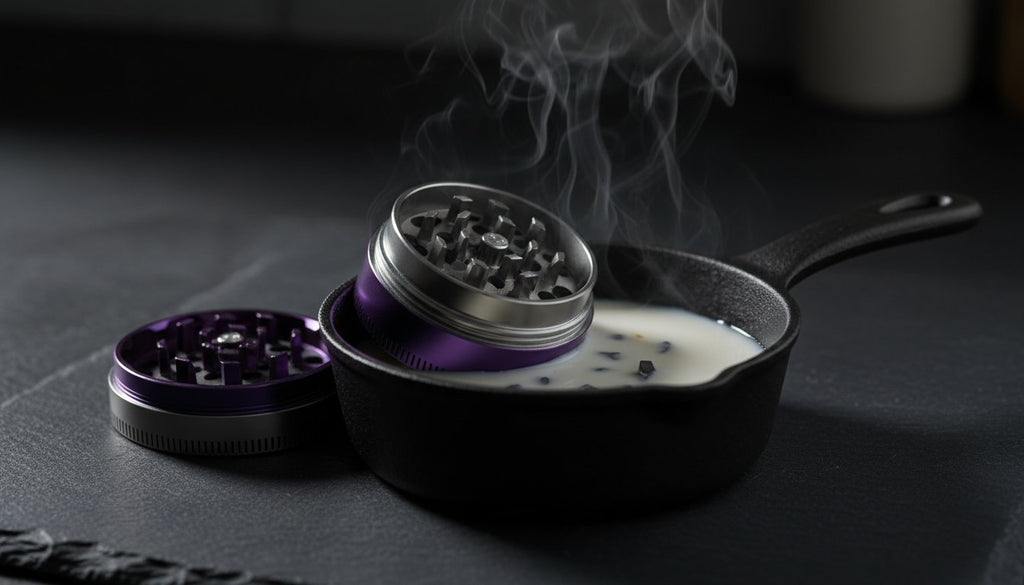
Για να οπτικοποιήσετε αυτή τη διαδικασία και να δείτε πώς αλληλεπιδρούν οι ρητίνες με το υγρό, παρακολουθήστε αυτή τη χρήσιμη επίδειξη:
Τα Οφέλη του Γάλακτος σε Σύγκριση με Παραδοσιακούς Διαλύτες
Η επιλογή γαλακτοκομικών προϊόντων αντί για βιομηχανικούς διαλύτες προσφέρει αρκετά ξεχωριστά πλεονεκτήματα για τον επιμελητή που ενδιαφέρεται για την υγεία. Πρώτον, το γάλα είναι απολύτως ασφαλές για τρόφιμα. Δεν υπάρχει κίνδυνος εισπνοής υπολειμματικών χημικών ατμών ή τυχαίας κατάποσης ιχνών μετουσιωμένης αλκοόλης. Δεύτερον, το γάλα είναι εξαιρετικά απαλό για τον εξοπλισμό σας. Αφαιρεί τις ρητίνες χωρίς τον κίνδυνο απογύμνωσης ή διάβρωσης των εξειδικευμένων ανοδιωμένων φινιρισμάτων που βρίσκονται σε εργαλεία υψηλής ποιότητας από αλουμίνιο. Ουσιαστικά επιτυγχάνετε ένα εργοστασιακά καθαρό αποτέλεσμα ενώ προετοιμάζετε μια γκουρμέ βάση για καφέ ή κακάο. Αυτή η διπλή χρησιμότητα καθιστά τον καθαρισμό ενός
Πότε να Επιλέξετε τη Μέθοδο με Γάλα
Θα ξέρετε ότι είναι ώρα για πλύσιμο με γάλα όταν βιώσετε "το κόλλημα." Αυτό συμβαίνει όταν η συσσώρευση βοτανικών δημιουργεί αντίσταση στη ροπή του
Η Επιστήμη της Εκχύλισης THC: Γιατί Έχει Σημασία η Περιεκτικότητα σε Λιπαρά
Η επιτυχία στον καθαρισμό ενός
Η θερμότητα εξυπηρετεί μια δευτερεύουσα, ζωτική λειτουργία: την αποκαρβοξυλίωση. Το μεγαλύτερο μέρος της ρητίνης που παγιδεύεται στον εξοπλισμό σας υπάρχει ως THCA, ο μη-μεθυστικός πρόδρομος του THC. Διατηρώντας μια σταθερή σιγοβράση, παρέχετε την θερμική ενέργεια που απαιτείται για την αφαίρεση μιας καρβοξυλικής ομάδας από το μόριο, ενεργοποιώντας ουσιαστικά τη σύνθεση. Αυτή η μετατροπή εξασφαλίζει ότι το ανακτημένο ρόφημά σας είναι τόσο ισχυρό όσο και καθαρό. Είναι μια λεπτή ισορροπία χημείας που μετατρέπει μια αγγαρεία σε μια εκλεπτυσμένη διαδικασία εξαγωγής.
Επιλέγοντας το Φορέα σας: Πλήρες Γάλα και Πέρα Από Αυτό
Η περιεκτικότητα σε λιπαρά είναι η πιο κρίσιμη μεταβλητή όταν καθαρίζετε ένα
Έλεγχος Θερμοκρασίας και Ακεραιότητα Κανναβινοειδών
Η ακρίβεια είναι αυτό που διαχωρίζει έναν γνώστη από έναν ερασιτέχνη.Ένα κοινό λάθος είναι να αφήνετε το γάλα να φτάσει σε βρασμό στους 212°F. Η υψηλή θερμοκρασία μπορεί να κάψει το γάλα, δημιουργώντας μια δυσάρεστη γεύση "καμένου" και ενδεχομένως να υποβαθμίσει τα ευαίσθητα τερπένια που θέλετε να διατηρήσετε. Αντίθετα, στοχεύστε σε ένα απαλό σιγοβράσιμο. Η ιδανική θερμοκρασία για αποτελεσματική έγχυση THC σε έναν λιπιδικό φορέα χωρίς να υποβαθμίζονται τα ευαίσθητα τερπένια είναι μεταξύ 160°F και 180°F. Η χρήση ενός ψηφιακού θερμόμετρου κουζίνας σας επιτρέπει να διατηρείτε αυτή τη γλυκιά ισορροπία με αυτοπεποίθηση, διασφαλίζοντας την ακεραιότητα τόσο του γάλακτος όσο και του μεταλλικού εξοπλισμού σας καθ' όλη τη διάρκεια της διαδικασίας.
Βήμα-Βήμα: Πώς να Καθαρίσετε το Μεταλλικό σας Μύλος για βότανα με Γάλα
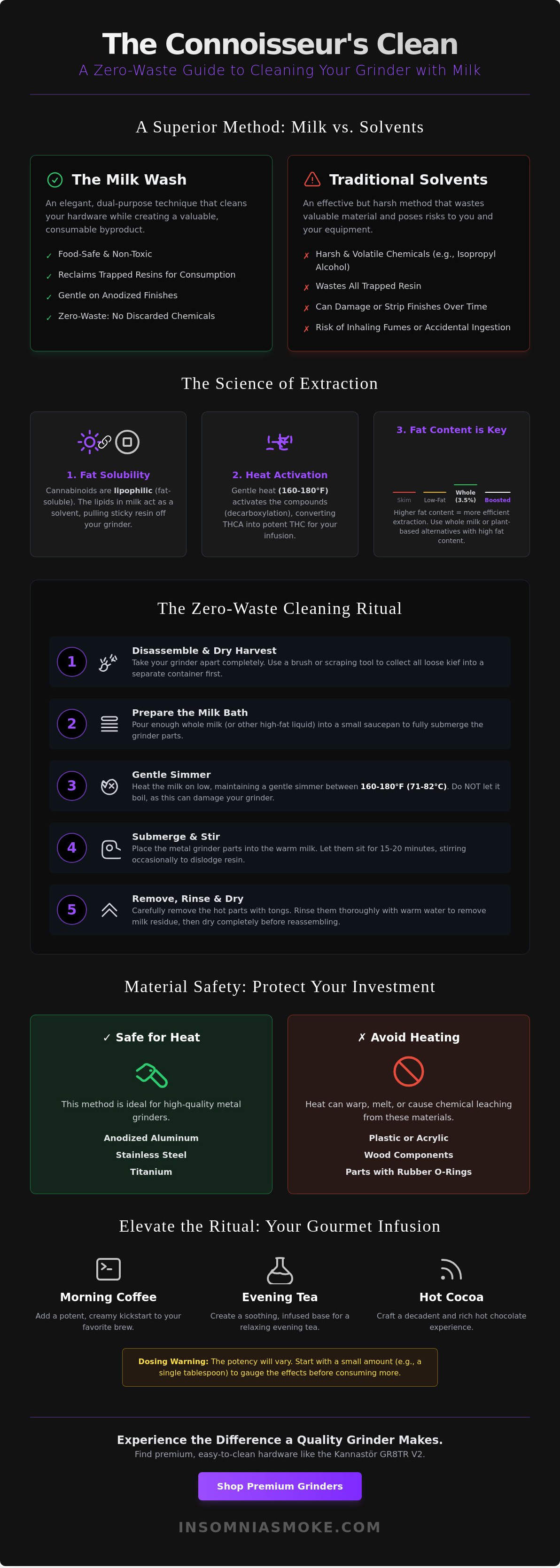
Η εκτέλεση ενός άψογου πλυσίματος με γάλα απαιτεί περισσότερα από μια κουζίνα και μια κατσαρόλα. Είναι μια υπολογισμένη τελετουργία που διατηρεί τον εξοπλισμό σας ενώ μεγιστοποιεί την απόδοση της βοτανικής σας ανάκτησης.Πριν ξεκινήσετε τη διαδικασία καθαρισμού ενός
Απαιτούμενα Εργαλεία για Επαγγελματικό Καθαρισμό
- Μικρή κατσαρόλα από ανοξείδωτο χάλυβα: Επιλέξτε μια κατσαρόλα με βαρύ πάτο για να εξασφαλίσετε ομοιόμορφη κατανομή της θερμότητας. Αποφύγετε τις αντικολλητικές επιφάνειες, καθώς η ρητίνη μπορεί περιστασιακά να συνδεθεί με την επίστρωση.
- Ψιλή σήτα: Είναι απαραίτητη για την τελική χύση ώστε να πιάσει τυχόν περιπλανώμενα βοτανικά σωματίδια.
- Βούρτσα με μαλακές τρίχες: Μια ειδική βούρτσα λεπτομέρειας βοηθά στην απομάκρυνση επίμονων κρυστάλλων κατά τη φάση πριν τη συγκομιδή.
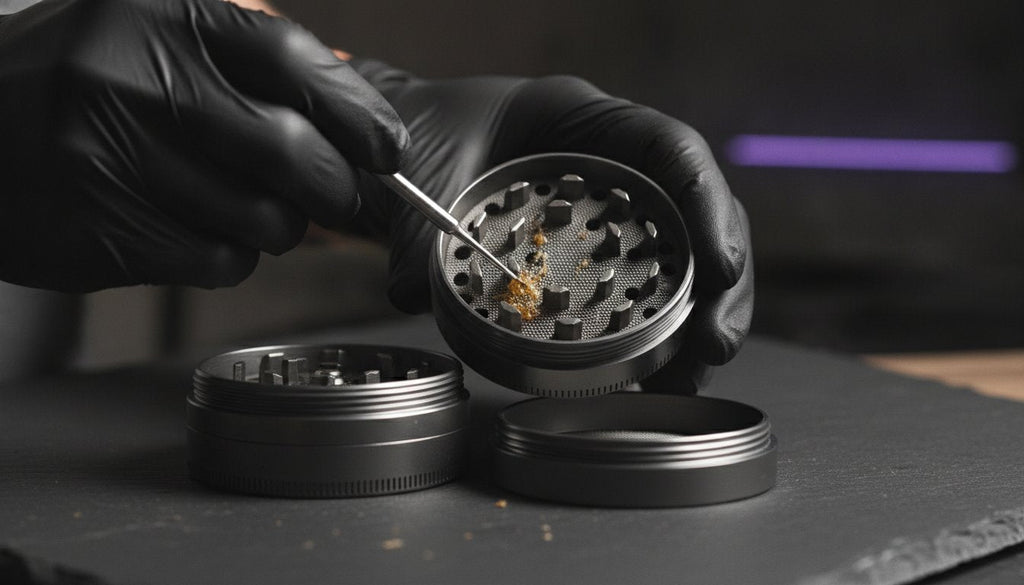
Ξεκινήστε με τη Φάση 1: Η Προ-Συγκομιδή. Χρησιμοποιήστε τη βούρτσα λεπτομέρειας για να συλλέξετε τυχόν χαλαρούς κρυστάλλους από τα δόντια και την οθόνη. Αυτό το ξηρό υλικό είναι καλύτερο να αποθηκευτεί για άμεση χρήση, αφήνοντας μόνο τις επίμονες, συνδεδεμένες ρητίνες για το πλύσιμο με γάλα. Μόλις καθαρίσετε, προχωρήστε στη Φάση 2: Αποσυναρμολόγηση.Οι αρθρωτές μονάδες όπως το
Η Διαδικασία Σιγοβρασμού
Η Φάση 3 είναι ο πυρήνας της εξαγωγής. Τοποθετήστε τα μεταλλικά σας εξαρτήματα στην κατσαρόλα και καλύψτε τα πλήρως με πλήρες γάλα. Τακτοποιήστε τα κομμάτια προσεκτικά για να αποφύγετε το χτύπημα ή το γρατζούνισμα της επιφάνειας. Διατηρήστε έναν απαλό σιγοβρασμό για 20 έως 30 λεπτά. Θα πρέπει να χρησιμοποιήσετε μια σπάτουλα σιλικόνης
Φάση 4: Η Καθαρισμός είναι το βήμα που οι περισσότεροι ερασιτέχνες οδηγοί παραβλέπουν. Μόλις τα κομμάτια είναι καθαρά, αφαιρέστε τα από το γάλα και ξεπλύνετε τα αμέσως με ζεστό νερό υψηλής πίεσης. Αυτό αφαιρεί τα υπολείμματα πρωτεϊνών γάλακτος που διαφορετικά θα μπορούσαν να χαλάσουν και να προκαλέσουν οσμές. Τέλος, η Φάση 5: Η Θεραπεία περιλαμβάνει την εξασφάλιση 100% ξηρότητας. Τοποθετήστε τα εξαρτήματα σε μια καθαρή πετσέτα μικροϊνών σε καλά αεριζόμενο χώρο. Μην επανασυναρμολογήσετε τη μονάδα μέχρι να στεγνώσει πλήρως κάθε ίνα για να αποφύγετε την οξείδωση ή την παγιδευμένη υγρασία. Αυτή η σχολαστική προσέγγιση εξασφαλίζει ότι το
Ασφάλεια Υλικών: Μέταλλο vs. Πλαστικό και Αποφυγή Ζημιών
Ο καθαρισμός ενός
Γιατί το Πλαστικό Μύλοι για βότανα και το Γάλα δεν Συνδυάζονται
Τα Συνθετικά
Ενώ το ανοδιωμένο αλουμίνιο είναι εξαιρετικό, ο ιατρικής ποιότητας ανοξείδωτος χάλυβας παραμένει το χρυσό πρότυπο για καθαρισμό με βάση τη θερμότητα. Είναι σχεδόν άφθαρτο και εντελώς μη αντιδραστικό. Αυτό το υλικό εξασφαλίζει ότι το προφίλ γεύσης του εγχυμένου ποτού σας παραμένει καθαρό, χωρίς καμία μεταλλική επίγευση. Είτε διατηρείτε ένα μπουτίκ εργαλείο αλουμινίου είτε ένα βαρέως τύπου εργαλείο από χάλυβα, η προτεραιότητα είναι πάντα η διατήρηση της ακεραιότητας του υλικού. Μπορείτε να βρείτε μια επιλεγμένη συλλογή από αυτά τα υψηλής ποιότητας, ασφαλή για θερμότητα εργαλεία στο
Προστασία της Επιφάνειας Υψηλής Ποιότητας Εξοπλισμού
Ο υψηλής ποιότητας εξοπλισμός είναι κατασκευασμένος για να διαρκεί μια ζωή, αλλά πρέπει να προσέχετε για να διατηρήσετε την αισθητική και λειτουργική ποιότητα της επιφάνειας.Η αρθρωτή σχεδίαση του
Πάντα να αφαιρείτε τα μη μεταλλικά εξαρτήματα πριν ξεκινήσετε. Οι λαστιχένιοι δακτύλιοι και οι σιλικονούχες
Αναβαθμίζοντας το Τελετουργικό: Χρησιμοποιώντας το Εμποτισμένο Γάλα σας
Το τελικό στάδιο αυτής της διαδικασίας μετατρέπει μια εργασία συντήρησης σε γαστρονομικό αποκορύφωμα. Αφού τελειώσετε τον καθαρισμό ενός
Γαστρονομικές Εφαρμογές για Ανακτημένο Γάλα
Ο πιο άμεσος τρόπος να απολαύσετε τα αποτελέσματά σας είναι μέσω ενός "Κακάο του Γνώστη". Ανακατέψτε ξύσματα υψηλής ποιότητας μαύρης σοκολάτας και μια πινελιά μέλι για να δημιουργήσετε ένα πολυτελές ρόφημα. Αν προτιμάτε ένα πρωινό τελετουργικό, το εμποτισμένο γάλα σας είναι μια εξαιρετική προσθήκη στον καφέ ή το τσάι.Οι βοτανικές νότες συχνά συνδυάζονται καλά με το καβουρδισμένο βάθος του εσπρέσο. Για όσους απολαμβάνουν το ψήσιμο, χρησιμοποιήστε το γάλα σε μικρές λιχουδιές όπως μπισκότα με λεβάντα ή μπράουνις. Αν η γήινη γεύση είναι πολύ έντονη, ενσωματώστε βανίλια ή κανέλα για να ισορροπήσετε το προφίλ χωρίς να υπερκαλύψετε τα λεπτά τερπένια.
Να είστε προσεκτικοί σχετικά με τη δοσολογία και την ισχύ. Οι ανακτημένες ρητίνες μπορεί να είναι παραπλανητικά ισχυρές. Επειδή το κίεφ που παγιδεύεται στον εξοπλισμό σας αντιπροσωπεύει μια συμπυκνωμένη συλλογή από διάφορες παρτίδες, το προκύπτον γάλα μπορεί να έχει μεγαλύτερη πυκνότητα κανναβινοειδών από την αναμενόμενη. Ξεκινήστε με μια μικρή ποσότητα του υγρού, ίσως ένα τέταρτο του φλιτζανιού, και περιμένετε τουλάχιστον 90 λεπτά για να αξιολογήσετε τα αποτελέσματα. Αντιμετωπίστε το "
Η Λογική του Premium Εξοπλισμού
Η επιτυχία σας στον καθαρισμό ενός
Σκεφτείτε ολόκληρο τον κύκλο ζωής των βοτανικών σας. Μπορεί να επιλέξετε να συνδυάσετε την καθαρή, ακριβή άλεση σας με την καθαρή γεύση ενός ξηρού βοτάνου
Το Μύλος για βότανα σας αξίζει κάτι καλύτερο από μια συντόμευση
Ο καθαρισμός ενός
Το συμπέρασμα είναι απλό: η ποιότητα των εργαλείων σας διαμορφώνει την ποιότητα ολόκληρης της εμπειρίας σας. Ένα αρθρωτό, ιατρικής ποιότητας
Αν το τρέχον
Συχνές Ερωτήσεις
Είναι ασφαλές να πιείτε γάλα που έχει χρησιμοποιηθεί για να καθαρίσει ένα Μύλος για βότανα ?
Είναι ασφαλές να καταναλώσετε το γάλα αν χρησιμοποιήσετε ένα μεταλλικό
Μπορώ να καθαρίσω ένα πλαστικό ή ακρυλικό Μύλος για βότανα με γάλα;
Ποτέ μην χρησιμοποιείτε αυτή τη μέθοδο για πλαστικό ή ακρυλικό εξοπλισμό.Η θερμότητα που απαιτείται για τη διάλυση των ρητινών θα προκαλέσει παραμόρφωση ή στρέβλωση των συνθετικών υλικών, καταστρέφοντας τη συνέπεια του αλέσματος. Πιο σημαντικό, η θέρμανση του πλαστικού ενέχει τον κίνδυνο έκλυσης επιβλαβών χημικών όπως το BPA στο γάλα σας. Επιμείνετε σε ιατρικού βαθμού αλουμίνιο ή ανοξείδωτο χάλυβα για οποιεσδήποτε τελετουργίες ανάκτησης με βάση τη θερμότητα.
Πόσο χρόνο πρέπει να σιγοβράσω το Μύλος για βότανα στο γάλα;
Διατηρήστε ένα απαλό σιγοβράσιμο για περίπου 20 έως 30 λεπτά. Αυτή η διάρκεια επιτρέπει αρκετό χρόνο για να δεσμευτούν τα λίπη του γάλακτος με τις κολλώδεις ρητίνες χωρίς να καεί το υγρό. Θα πρέπει να δείτε το γάλα να αλλάζει χρώμα καθώς διαλύεται το kief. Όταν καθαρίζετε ένα
Θα κάνει η μέθοδος με το γάλα το Μύλος για βότανα μου να μυρίζει άσχημα;
Το υλικό σας δεν θα αναπτύξει οσμή αν κάνετε έναν πλήρη καθαρισμό μετά το πλύσιμο. Αμέσως μετά την αφαίρεση των κομματιών από το γάλα, χρησιμοποιήστε ζεστό νερό υψηλής πίεσης για να αφαιρέσετε τις υπολειμματικές πρωτεΐνες γάλακτος. Αν παραλείψετε αυτό το βήμα, το γάλα μπορεί να χαλάσει στο σπείρωμα και να δημιουργήσει δυσάρεστες οσμές. Ένα καθαρό ξέπλυμα εξασφαλίζει ότι το εργαλείο σας παραμένει φρέσκο και καθαρό σαν καινούργιο.
Το καθάρισμα ενός Μύλος για βότανα με γάλα σε κάνει πραγματικά να νιώθεις ευφορία;
Η ανάκτηση ενεργών κανναβινοειδών μέσω αυτής της μεθόδου μπορεί να παράγει σημαντικά μεθυστικά αποτελέσματα. Η θερμότητα από το σιγοβράσιμο διευκολύνει την αποκαρβοξυλίωση, η οποία μετατρέπει το THCA σε ενεργό THC. Επειδή η ισχύς εξαρτάται εξ ολοκλήρου από την ποσότητα της συσσώρευσης στο εργαλείο σας, ξεκινήστε πάντα με μια μικρή ποσότητα του τελικού ποτού για να αξιολογήσετε τη δύναμη.
Τι είδους γάλα λειτουργεί καλύτερα για τον καθαρισμό ενός Μύλος για βότανα ?
Το πλήρες γάλα με τουλάχιστον 3,5% περιεκτικότητα σε λιπαρά είναι η ιδανική επιλογή για αυτή τη διαδικασία. Τα λιπίδια στο γάλα λειτουργούν ως διαλύτης για τις ρητίνες.Αν προτιμάτε εναλλακτικές φυτικής προέλευσης, επιλέξτε επιλογές με υψηλά λιπαρά όπως το πλήρες γάλα καρύδας. Όταν καθαρίζετε ένα
Χρειάζεται να αποκαρβοξυλιώσω το Μύλος για βότανα μου πριν το βάλω στο γάλα;
Δεν χρειάζεται να προ-αποκαρβοξυλιώσετε το υλικό σας. Η διαδικασία σιγοβρασμού, που παραμένει μεταξύ 160 και 180 βαθμών Φαρενάιτ, παρέχει αρκετή θερμική ενέργεια για να ενεργοποιήσει τα κανναβινοειδή σε 20 με 30 λεπτά. Αυτή η διπλή προσέγγιση καθαρίζει το εργαλείο σας και προετοιμάζει την έγχυση σε ένα μόνο, απλοποιημένο βήμα χωρίς την ανάγκη για επιπλέον προετοιμασία.
Πώς μπορώ να βεβαιωθώ ότι δεν έχει μείνει υπόλειμμα γάλακτος μέσα στο Μύλος για βότανα μου;
Εξασφαλίστε πλήρη καθαρισμό χρησιμοποιώντας μια μαλακή βούρτσα κάτω από ζεστό τρεχούμενο νερό αμέσως μετά το μπάνιο με γάλα. Δώστε ιδιαίτερη προσοχή στο σπείρωμα και την λεπτή οθόνη πλέγματος όπου μπορεί να παγιδευτεί το γάλα.Τοποθετήστε τα κομμάτια σε μια πετσέτα μικροϊνών για να στεγνώσουν εντελώς στον αέρα. Ποτέ μην επανασυναρμολογείτε τη μονάδα ενώ παραμένει υγρασία, καθώς αυτό μπορεί να οδηγήσει σε οξείδωση ή παγιδευμένες οσμές.

