


SENASTE INLÄGG
Kan du ta med vapes på ett flygplan? Kännarnas guide till flygresor 2026
Föreställ dig att stå vid en säkerhetskontroll i juni 2026 och se en TSA-agent inspektera din begränsade upplaga av hårdvara. Det är ett ögonblick av ren ångest som varje entusiast fruktar. Du undrar ofta, kan du ta med vapes på ett flygplan utan att riskera konfiskering av din premiuminvestering? Vi håller med om att din utrustning representerar en noggrant utvald ritual som bygger på precisionsingenjörskonst och högkvalitativt hantverk. Du ska inte behöva offra dina standarder för en flygning.
Denna guide ger den definitiva ramen för 2026 för att transportera din utrustning över internationella gränser samtidigt som du upprätthåller fullständig efterlevnad av FAA- och ICAO-standarder. Du kommer att lära dig de exakta metoderna för att förhindra röriga läckor under tryckförändringar i kabinen och hur du säkrar dina litiumjonkraftkällor enligt de senaste säkerhetsprotokollen. Vi har sammanställt de senaste uppgifterna från 2024 års TSA-rapporter om farliga material för att säkerställa att du ligger steget före reglerna.Upptäck de viktiga packningsteknikerna och destinationslagarna som säkerställer att din nästa resa förblir lika sofistikerad som de märken du väljer att bära.
Viktiga punkter
- Upptäck varför du alltid måste ha dina premium vaping-enheter i ditt handbagage för att följa de strikta brandsäkerhetsföreskrifterna för litiumjonbatterier 2026.
- Lär dig hur du hanterar högpresterande hårdvara samtidigt som du håller dig inom den universella 100Wh-batterigränsen för internationella flygningar.
- Behärska 3-1-1-regeln och kabintrycksfysik för att svara på frågan, "kan du ta med vapes på ett flygplan" utan att uppleva kladdiga e-vätskeläckor.
- Navigera enkelt genom komplexa globala regler och identifiera specifika regioner där innehav kan leda till allvarliga juridiska konsekvenser.
- Utforska fördelarna med att investera i luktfria, skyddande resefodral för att upprätthålla en diskret och professionell profil under hela din resa.
Kan du ta med vapes på ett flygplan? De viktiga reglerna för 2026
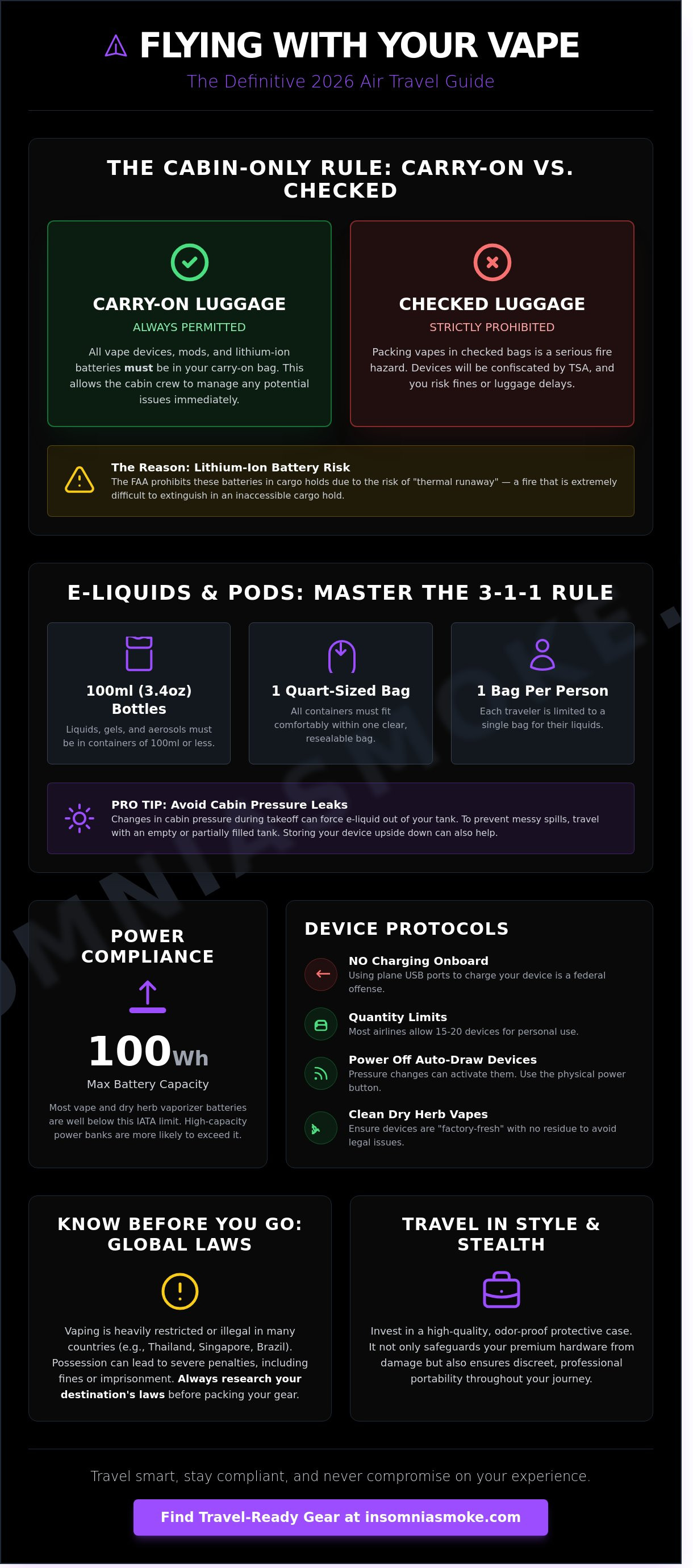
Det korta svaret är ja. Du kan ta med vapes på ett flygplan år 2026, men platsen för din enhet avgör om du passerar säkerhetskontrollen eller riskerar en hög böter. Luftfartsmyndigheter som TSA och FAA upprätthåller en strikt "endast i kabinen"-policy för alla elektroniska nikotinleveranssystem. Denna regel finns eftersom litiumjonbatterier utgör en betydande brandrisk. Om ett batteri skulle gå sönder i det trycksatta lastutrymmet är det nästan omöjligt för besättningen att nå det. Inne i kabinen använder flygvärdinnor specialiserade brandcontainmentväskor för att omedelbart hantera termiska rusningshändelser.
Säkerhetsprotokoll skiljer mellan hårdvaran och e-vätskan.Din enhet är ett elektroniskt verktyg, medan juicen är en reglerad vätska. 2026 FAA:s säkerhetsstandarder betonar att även om hårdvaran är tillåten, måste den förbli avstängd under hela resan. Att ladda din enhet via en laptop eller ett flygplans USB-port är strikt förbjudet enligt federal lag för att förhindra överhettning.
Handbagage vs. Incheckat bagage: En slutgiltig dom
Packa aldrig din vape i en incheckad väska. Om TSA-agenter upptäcker ett litiumbatteri i lastutrymmet kommer de sannolikt att ta bort enheten och lämna ett meddelande om inspektion i din resväska. Detta leder ofta till konfiskerad utrustning eller bagageförseningar. Om ditt flyg är fullt och agenter kräver att du gate-checkar ditt handbagage, måste du omedelbart ta bort din vape. Förvara den i fickan eller ett litet personligt föremål som en handväska eller ryggsäck.
Att ha en vape i fickan är generellt acceptabelt under ombordstigningsprocessen.Men du måste placera den i lådan för röntgenkontroll vid säkerhetskontrollen. När du väl är på planet måste enheten stanna i din väska eller ficka. Försök inte använda den. Moderna flygplan är utrustade med mycket känsliga sensorer som är utformade för att upptäcka även små mängder ånga i toaletterna.
Engångsprodukter vs. Påfyllningsbara system
Flygplatssäkerhet behandlar engångsvapes och premium påfyllningsbara system med samma nivå av granskning. Båda innehåller batterier och vätskekomponenter. För de som bär med sig högkvalitativa påfyllningsbara kit, se till att dina tankar är tomma eller bara delvis fyllda. Kabintrycksförändringar under stigning orsakar ofta att tankar läcker. Att förvara din enhet upp och ner eller i ett dedikerat lufttätt fodral skyddar dina tillhörigheter från klibbiga spill.
- Kvantitetsbegränsningar: De flesta flygbolag tillåter en rimlig mängd för personligt bruk, vanligtvis begränsad till 15 till 20 enheter.
- Risker med auto-draw: Höghöjdstryck kan utlösa auto-draw-sensorer. Stäng av alla enheter med en fysisk strömbrytare.
- Vätskeregler: All e-vätska eller pods måste få plats i en enda kvartstor genomskinlig påse, enligt 3-1-1-vätskereglerna.
Upptäck det senaste inom premiumhårdvara och håll dig uppdaterad genom att kontrollera ditt specifika flygbolags bagagepolicy för 2026 innan du beger dig till terminalen. De flesta internationella flygbolag speglar nu TSA-standarder, men vissa regionala flygbolag i Asien eller Sydamerika kan ha striktare enhetsbegränsningar. Prioritera alltid säkerhet för att säkerställa att din resa förblir en förfinad och stressfri upplevelse.
Hantera Batterier och Premium Hårdvara (510 Trådar & Torrört Vapes)
Att resa med högkvalitativ hårdvara kräver en förfinad inställning till säkerhet och efterlevnad.När du frågar kan du ta med vapes på ett flygplan, beror svaret mycket på hur du hanterar dina strömkällor. De flesta flygbolag följer International Air Transport Association (IATA) riktlinjer, som begränsar litiumjonbatterier till en 100 Watt-timmar (Wh) gräns per enhet. En Watt-timme är en måttenhet som beskriver den totala energikapaciteten hos ett batteri under en timme. De flesta standard 510-batterier och bärbara torrört-enheter ligger långt under denna 100Wh-gräns, men du måste ha dem i ditt handbagage. Packa aldrig litiumbatterier i incheckat bagage, eftersom risken för brand i lastutrymmet är en primär säkerhetsfråga för FAA.
Torrört Förångare Reserutin
Premiumenheter som Pax Plus eller Arizer Solo 3 är betydande investeringar. För att säkerställa att de passerar genom säkerhetskontrollen är renlighet ett måste.Alla spår av botaniska rester kan utlösa sekundära kontroller eller leda till konfiskering vid internationella kontrollpunkter. Skrubba varje kammare, skärm och luftväg med 90% isopropylalkohol tills enheten ser ut och luktar fabriksny. Att bära en "Ny i låda" enhet är det mest effektiva sättet att undvika "paraphernalia"-stigma som ofta upplevs vid tullen. Denna professionella förberedelse återspeglar standarderna hos en sann kännare och säkerställer att din resa förblir stressfri.
Batterisäkerhet och 510-gängsskydd
Skydda dina 510-gängsbatterier genom att skruva loss patronerna innan du går till terminalen. Detta enkla steg förhindrar läckage orsakade av förändringar i kabintrycket och stoppar batteriet från att avfyra av misstag. Om du använder lösa 18650- eller 21700-celler för högpresterande mods, förvara dem i dedikerade plastskyddshylsor.Exponerade terminaler som rör vid metallföremål som nycklar kan orsaka termisk rusning, en farlig överhettningshändelse. Använd ett hårt skal för att hålla din utrustning säker och organiserad. Upptäck vårt urval av premiumhårdvara och tillbehör för att hitta rätt reseklara utrustning för din nästa resa. Använd alltid avfyrningslåset på din enhet eller ta bort batteriet helt för att förhindra att det aktiveras i din väska. Dessa små vanor skyddar din utrustning och bibehåller flygets integritet. Om du inte tar dessa försiktighetsåtgärder riskerar du att skada din premiumhårdvara eller möta förseningar vid gaten.
Packa E-vätskor, Patroner och Pods Utan Läckage
Fysik utgör en unik utmaning på 30 000 fot. Flygplanskabiner är trycksatta, men det interna trycket är lägre än vid havsnivå. Denna skillnad gör att luft som är fångad inuti tankar expanderar.Den expanderande luften trycker e-vätska genom spolar och ut ur luftflödeshålen, vilket skapar en klibbig röra i ditt bagage. Att välja förseglade, förfyllda pods ger ofta en mer pålitlig upplevelse än öppna tanksystem. Dessa fabrikstätade enheter är bättre utrustade för att hantera atmosfäriska förändringar utan att misslyckas. Att förstå dessa teknikaliteter säkerställer att du kan ta med vapes på ett flygplan utan att riskera en förstörd kabinväska.
Trycksäkra din vape-utrustning
Fällan "Halvfull" är ett vanligt misstag för resenärer. En tank som är halvfull innehåller tillräckligt med luft för att expandera avsevärt, vilket nästan garanterar ett läckage. Fyll din tank helt för att inte lämna något utrymme för luft, eller töm den helt innan du går ombord. Förvara din enhet upp och ner under flygningen. Denna position säkerställer att eventuell expanderande luft släpps ut genom luftflödeshålen utan att trycka ut vätska först. För extra säkerhet, placera enskilda komponenter i vakuumförseglade påsar.Detta ger ett sista lager av skydd mot spill på hög höjd.
Navigera CBD och Delta-8 Patroner
De juridiska landskapen förblir komplexa när det gäller hampa-deriverade produkter som CBD och Delta-8. Medan 2018 års Farm Bill legaliserade hampa som innehåller mindre än 0,3% THC på federal nivå, fortsätter delstatslagarna att utvecklas fram till 2026. Ha alltid med dig ett fysiskt eller digitalt analyscertifikat (COA) för varje patron i ditt kit. Detta dokument bevisar produktens laglighet och kemiska sammansättning under säkerhetskontroller. Inrikesresor är generellt hanterbara med rätt dokumentation, men internationella flygningar medför extrema risker. Många länder har nolltoleranspolicyer för alla cannabisrelaterade oljor, oavsett deras THC-innehåll eller juridiska status i USA.
Navigera internationella regler och flygplatsetikett
Att förstå globala regler är avgörande för varje sofistikerad resenär. Medan du kanske frågar kan du ta med vapes på ett flygplan, beror svaret mycket på din ankomstgate. Högklassiga enheter är värdefulla ägodelar, men de riskerar konfiskering i länder med strikta förbud. Thailand är ett av de mest rigorösa exemplen; innehav av en vape kan resultera i ett fängelsestraff på upp till 10 år. Singapore upprätthåller ett totalt förbud, där även att bära en enhet för personligt bruk medför böter på upp till $2,000. Indien anslöt sig till dessa led i september 2019, genom att förbjuda produktion, försäljning och import av alla e-cigarettprodukter.
Tulltjänstemän drar ofta en skarp linje mellan personligt bruk och import.Att bära en enskild enhet kan förbises i vissa regioner, men att ta med flera förseglade enheter eller stora mängder e-vätska utlöser ofta anklagelser om försäljning. Undersök alltid din destinations specifika inställning till nikotinsalter och hårdvara innan du reser. När du anländer till flygplatsen, respektera de etablerade gränserna. De flesta internationella nav begränsar vaping till utsedda röklounger eller utomhuszoner. Anta aldrig att ett rökförbudsskylt inte gäller din Förångare. Professionell etikett säkerställer att vaping-gemenskapen bibehåller ett positivt rykte globalt.
Global Vaping Law Heat Map
Etikett och juridiska konsekvenser under flygning
Flygplanskabinen är ett strikt reglerat utrymme där smygvaping är en farlig myt. Flygplanets rökdetektorer känner inte bara av värme; de använder ljusspridningsteknik för att upptäcka små aerosolpartiklar. Om du utlöser ett larm är konsekvenserna allvarliga.Att vejpa på ett flygplan är ett federalt brott. FAA kan utdöma civila böter på upp till $37,000 per incident. Utöver ekonomiska förluster förbjuder flygbolag ofta förövare från framtida flygningar, vilket placerar dem på permanenta No Fly-listor. För att hantera nikotinbehov på långdistansresor, förlita dig på diskreta alternativ. Nikotinpåsar eller specialiserat tuggummi erbjuder en pålitlig lösning utan att riskera juridiska problem. Detta disciplinerade tillvägagångssätt skyddar dina reseprivilegier och din premiumutrustning.
Upptäck vårt noggrant utvalda sortiment av reseklara produkter. Handla våra premiumvarumärken för att hitta den perfekta utrustningen för din nästa internationella resa.
Resa med stil: Skyddande fodral och diskret portabilitet
Att bekräfta om du kan ta med vapes på ett flygplan är det första steget mot en lyckad resa. Men den premiumresenären förstår att logistisk efterlevnad bara är grunden.På Insomnia Smoke tror vi att din utrustning ska spegla ett engagemang för både kvalitet och diskretion. Ett dedikerat bärfodral skyddar din investering från de fysiska påfrestningarna under resan och förhindrar oavsiktlig aktivering av din enhet under transport. Det handlar om att upprätthålla en professionell profil från flygplatsloungen till din slutdestination.
Vår filosofi kretsar kring ett noggrant urval där funktionalitet möter högklassig design. Vi behandlar rökningstillbehör som förfinade verktyg snarare än bara varor. Upptäck hur ett välorganiserat kit förvandlar en stressig säkerhetskö till en smidig övergång. Genom att välja utrustning som prioriterar prestanda säkerställer du att din ritual förblir oavbruten oavsett ditt postnummer.
Professionens val: Holk och RYOT
Skydda dina patroner och hårdvara med Holk Joint bärfodral.Detta eleganta tillbehör erbjuder en luktfri miljö som håller dina glaskomponenter säkra och ditt bagage doftneutralt. När du frågar om du kan ta med vapes på ett flyg, kom ihåg att integritet är en viktig del av svaret. För de som uppskattar en klassisk backup, förblir RYOT Wooden Magnetic Dugout ett toppval för sin taktila kvalitet och patenterade magnetiska stängningssystem. Dessa premiumprodukter använder avancerade material som kolfodrad tyg. Denna teknik använder aktivt kol för att fånga luktmolekyler inom fibrerna; det är ett nödvändigt lager av integritet för den moderna kännaren som värdesätter en lågprofilerad estetik.
Väsentligt underhåll för resan
Ditt kit kräver specifik uppmärksamhet när du når din destination. Kabintrycksförändringar under en flygning kan orsaka mindre läckor i vissa tankar eller patroner, vilket gör reseanpassade isopropylservetter till ett viktigt tillskott i ditt handbagage.Vi rekommenderar våtservetter med en 70% alkoholkonsentration för att effektivt ta bort rester utan att skada de högkvalitativa ytorna på dina utvalda märken. För ditt hotell eller uthyrning, Ozium Air Sanitizer är ett professionellt hemligt vapen. Ursprungligen formulerad för kliniskt bruk på 1940-talet, Ozium reducerar kemiskt luftburna bakterier och ihållande lukter snarare än att bara maskera dem med tunga parfymer. Det säkerställer att din miljö förblir fräsch och din närvaro förblir diskret.
30-sekunders 'Redo att Flyga' Checklista:
- Bekräfta att alla litiumbatterier är packade i ditt handbagage, aldrig i incheckat bagage.
- Verifiera att din enhet är avstängd och att avfyrningsknappen är låst.
- Säkra dina patroner och pods i ett Holk eller RYOT luktfritt fodral för att förhindra läckage.
- Packa 70% isopropylservetter för omedelbar rengöring av ditt kit efter flygningen.
- Dubbelkolla de lokala reglerna i din ankomststad för att säkerställa att du följer regionala lagar.
Bemästra din transitstrategi för 2026
Att navigera i luften 2026 kräver en blandning av teknisk kunskap och rätt utrustning. Internationella civila luftfartsorganisationen (ICAO) fortsätter att kräva att alla litiumjonbatterier och värmeelement förvaras i ditt handbagage för att upprätthålla säkerheten i kabinen. Det är också viktigt att hålla dina e-vätskor och extrakt i behållare under 100 ml för att följa globala säkerhetsstandarder. När du undrar kan du ta med vapes på ett flygplan, är svaret ett definitivt ja, så länge du prioriterar organisation och följer lokala lagar på din destination. Högkvalitativ hårdvara kräver specialiserad vård för att klara tryckförändringar och transitstötar utan att läcka eller misslyckas.
Insomnia Smoke erbjuder ett noggrant utvalt sortiment av internationella märken och expertledd hårdvarurådgivning för att hjälpa dig resa med självförtroende. Vårt team säkerställer att du har tillgång till de finaste skyddsfodralen och tillbehören, allt levererat via diskret, världsomspännande frakt från vårt EU-lager. Upptäck Premium Travel Collection på Insomnia Smoke och skydda din utrustning med stil. Packa ditt kit med precision och se fram emot en förfinad upplevelse när du landar.
Vanliga Frågor
Kan jag ta med en engångsvape på ett flygplan 2026?
Ja, du kan ta med en engångsvape på ett flygplan 2026, men den måste stanna i ditt handbagage. TSA och FAA:s säkerhetsprotokoll är fortfarande strikta med att hålla all litiumdriven elektronik borta från lastutrymmet. Denna policy förhindrar potentiella brandrisker i flygplanets buk.Packa alltid dina engångsartiklar i fickan eller handbagaget för att säkerställa en smidig säkerhetsupplevelse.
Vad händer om TSA hittar en vape i min incheckade väska?
TSA-officerare kommer sannolikt att konfiskera enheten och lämna ett skriftligt meddelande om inspektion i ditt bagage. Litiumjonbatterier är begränsade till kabinen eftersom de utgör brandrisker i obevakade lastutrymmen. FAA-data från 2023 visar dussintals batterirelaterade brandincidenter, vilket leder till dessa strikta genomförandeåtgärder. Underlåtenhet att följa kan resultera i böter eller betydande förseningar under dina resor.
Måste jag ta ut min vape ur väskan vid säkerhetskontrollen?
Du behöver vanligtvis inte ta ut din enhet ur handbagaget om inte en TSA-officer specifikt ber om det. Behandla din vape som en liten elektronisk enhet under screeningprocessen. Om du har flera mods eller stora batterier, placera dem i en genomskinlig låda för att påskynda processen.Att hålla din premiumutrustning organiserad hjälper säkerhetspersonal att snabbt identifiera föremålen utan onödiga förseningar.
Kan jag ta med en tom vape eller en helt ny enhet i sin låda?
Ja, du kan ta med vapes på ett flygplan, oavsett om de är helt nya i lådan eller helt tomma. Den primära oron för säkerheten är litiumbatteriet, som alltid måste förvaras i ditt handbagage. Att ta med en ny enhet i sin originalförpackning är ett utmärkt sätt att skydda din investering. Detta säkerställer att din högkvalitativa hårdvara anländer till din destination i perfekt, showroomskick.
Hur många vape-patroner kan jag ta med på ett flygplan?
Du kan ta med ett obegränsat antal patroner så länge de passar inom TSA:s 3-1-1-vätskeregler. Varje enskild patron eller flaska e-vätska måste vara 3,4 ounces eller mindre. Alla dina vätskebehållare måste rymmas i en enda, kvartstor klar plastpåse.Detta säkerställer att ditt noggrant utvalda urval av smaker passerar genom säkerhetskontroller utan några komplikationer eller beslag.
Är det lagligt att vejpa i flygplatsens röklounger?
Vejpning är endast tillåten i särskilda röklounger som uttryckligen tillåter det. Många stora nav, såsom Heathrow Airport, övergick till helt rökfria inomhusmiljöer år 2024. Du måste använda de utomhusområden som är avsedda för detta och som ligger bortom terminalens ingångar. Konsultera alltid flygplatsens digitala karta eller informationsdisk för att hitta en laglig plats för din förfinade rökritual innan du går ombord.
Kan jag ladda min vape med flygplanets USB-portar?
Nej, du kan inte ladda din vape med flygplanets USB-portar eller eluttag. FAA:s säkerhetsföreskrifter förbjuder denna aktivitet för att förhindra risken för överhettning av batteriet under flygningen. Denna regel gäller alla elektroniska rökdon, oavsett märke eller batteristorlek.Ladda dina premiumenheter vid en terminal laddningsstation innan din flygning börjar för att säkerställa att de är redo att användas.
Vad ska jag göra om min vape läcker under flygningen?
Du bör förvara dina pods eller tankar i en förseglad, läcksäker påse och hålla dem upprätt under flygningen. Kabintrycksförändringar på 30 000 fot orsakar ofta att tankar läcker genom luftflödesventilerna. Att tömma din tank halvvägs innan ombordstigning ger tillräckligt med luftutrymme för att hantera tryckförändringarna. Detta enkla steg skyddar dina högkvalitativa mods och tillbehör från kladdiga e-vätskeläckor i ditt bagage.

