


VIIMEISIMMÄT JULKAISUT
Kuinka poistaa hartsia downstemistä: Asiantuntijan opas lasin huoltoon
Huolimaton downstem ei vain estä ilmavirtausta; se heikentää aktiivisesti hienoimpien kasvivalintojesi monimutkaista makuprofiilia. Olet todennäköisesti sijoittanut korkealaatuiseen borosilikaattiin sen puhtauden ja suorituskyvyn vuoksi, mutta itsepäinen kertymä voi saada jopa kaikkein ensiluokkaisimman kappaleen tuntumaan unohdetulta jäänteeltä. On turhauttavaa, kun "hitsattu"
Mestaroiminen taiteessa kuinka saada hartsi pois downstemistä on olennainen taito, joka erottaa satunnaisen käyttäjän todellisesta tuntijasta. Opastamme sinua palauttamaan lasisi alkuperäiseen boutique-tason kirkkauteen, varmistaen, että jokainen makuvivahde pysyy puhtaana ja jokainen perkolaatio on terävä. Tämä opas tutkii ammattimaisia ylläpitorutiineja, hyödyntäen korkeapuhdistusasteista isopropyyliliotusta ja erikoistyökaluja, jotka on suunniteltu suojaamaan sijoitustasi.Löydä, kuinka muutama tarkka askel voi muuttaa huollon askareesta palkitsevaksi säilytysrituaaliksi.
Tärkeimmät Opit
- Käytä 99% isopropyylialkoholia ja karkeaa merisuolaa ammattilaistason standardina itsepäisen, hapettuneen tervan liuottamiseen ja maun puhtauden palauttamiseen.
- Hallitse tarkka liotus- ja ravistelumenetelmä saadaksesi lopullisen oppaan siitä, kuinka saada hartsi pois downstemistä säilyttäen boutique-tason kirkkauden.
- Tunnista turvalliset uuttoprotokollat "hitsatuille"
Jointit vapauttaaksesi jumittuneet osat ilman riskiä korkealaatuisen borosilikaattilasin halkeamisesta. - Omaksu hienostunut huoltorituaali, joka sisältää käytön jälkeiset huuhtelut ja orgaaniset lisäaineet estämään tulevaa kertymistä ja varmistamaan johdonmukaisen, korkeatasoisen kokemuksen.
Hartsin kertymisen ja maun säilymisen tiede
Jokainen sessio jättää jäljen. kannabishartsi on palamisen ja lämpökondensaation tiivistetty sivutuote. Se alkaa ohuena, aromaattisena öljynä. Ajan myötä altistuminen hapelle muuttaa nämä haihtuvat yhdisteet paksuksi, hiiltyneeksi tervaksi. Tämä hapettumisprosessi luo rakenteellisen "hitsauksen", joka sitoo downstemin lasiin
Tämä ei ole vain esteettinen ongelma. Nämä kerrostumat vangitsevat tunkkaisia hajuja ja heikentävät aktiivisesti herkkiä terpeeniprofiileja. Kun hengität likaisen downstemin läpi, maistat eilisen hiiltymistä ennemmin kuin tämän päivän tuoretta satoa. Makuasioiden lisäksi seisova vesi ja hartsi luovat biofilmin; monimutkaisen mikro-organismiyhteisön, joka kukoistaa kosteissa ympäristöissä. Tämä biologinen kerros voi johtaa hengitysteiden ärsytykseen, jos sitä ei käsitellä. Säännöllinen puhdistus varmistaa, että rituaalisi pysyy sekä hygieenisenä että maukkaana.
Ymmärtääksesi paremmin tukkeutuneen osan mekaanisia haasteita, katso tämä hyödyllinen video:
Miksi downstemit tukkeutuvat nopeammin kuin muut osat
Downstemit toimivat ensisijaisena suodatuspisteenä.Niiden kapeat aukot ja tarkkuusporatut reiät on suunniteltu maksimaaliseen diffuusioon, mutta tämä suuri pinta-ala tekee niistä myös magneetin hiukkasille. Veden pintajännitys näyttelee piilotettua roolia tässä. Se vangitsee tuhkan ja raskaat öljyt juuri ulostulopisteessä, aiheuttaen nopeaa kertymistä. Tämä kertyminen luo palautesilmukan, jossa enemmän roskia tarttuu olemassa olevaan hartsikerrokseen. Tuhkan sieppaajan käyttö voi merkittävästi vähentää tätä taakkaa pysäyttämällä roskat ennen kuin ne saavuttavat downstemin herkän rakenteen, säilyttäen pääosan eheyden.
Vaikutus perkolaatioon ja ilmavirtaan
Kun hartsikerrokset paksunevat, downstemin sisähalkaisija kapenee merkittävästi. Tämä rajoitus pakottaa sinut vetämään kovemmin, häiriten vaivatonta vetoa, jota odotat korkealaatuiselta lasilta. Menetät sen tunnusomaisen "chugin" ja hienokuplaisen diffuusion, joka viilentää höyryä.Ymmärtäminen kuinka saada hartsi pois downstemistä on elintärkeää parhaan kannabiksen
Hartsinpoiston asiantuntijan työkalupakki
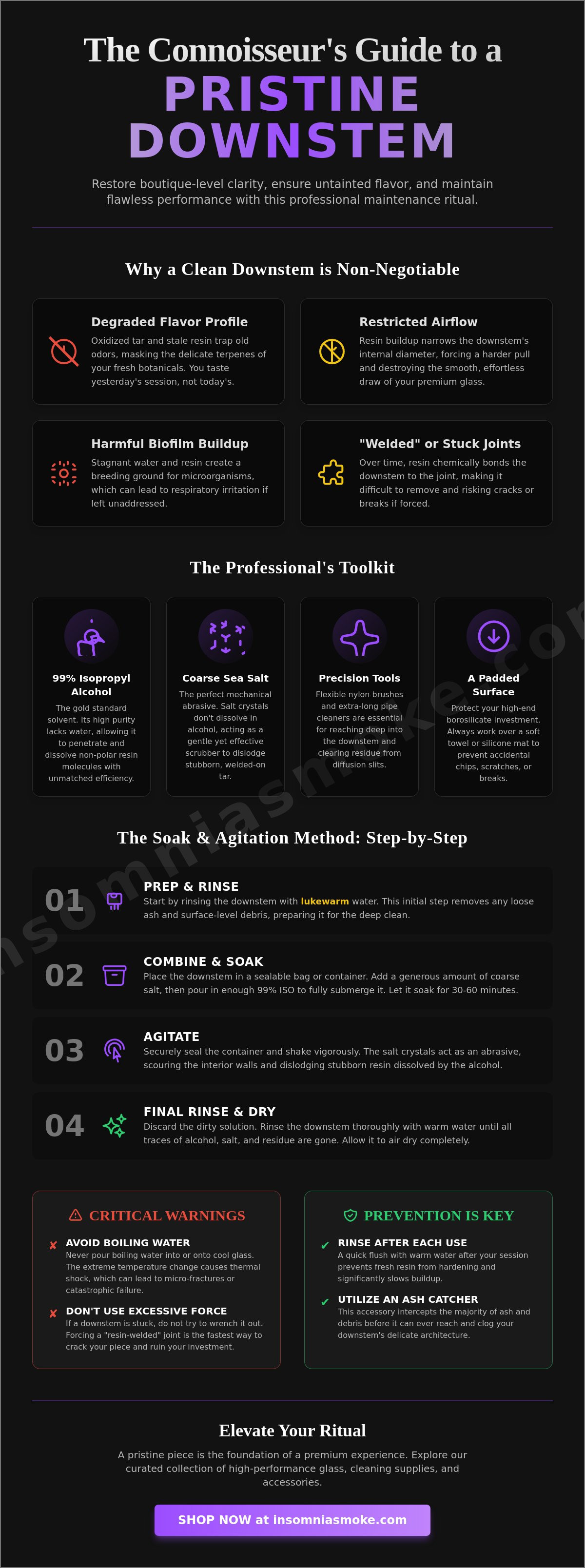
Showroom-viimeistelyn saavuttaminen vaatii enemmän kuin vain kärsivällisyyttä; se vaatii oikeaa kemiaa ja tarkkuusinstrumentteja. Ammattimainen huolto alkaa valitsemalla korkeapitoiset liuottimet, jotka liuottavat hiiltyneen kertymän jättämättä kemiallista kalvoa. Niille, jotka hallitsevat kuinka saada hartsi pois downstemistä, kultainen standardi on edelleen 99% Isopropyylialkoholi.Tämä korkea pitoisuus on erittäin tehokas puhdistus- ja desinfiointiaine, koska siinä ei ole alhaisemmissa prosenteissa olevaa vesipitoisuutta, mikä mahdollistaa sen tunkeutumisen ja ei-polaaristen hartsimolekyylien hajoamisen lähes välittömästi.
Pelkästään liuottimet kamppailevat usein "hitsatun" tervan kanssa, jota löytyy paljon käytetyistä kappaleista. Tässä kohtaa mekaaniset hankaavat aineet tulevat välttämättömiksi. Karkea merisuola on lasin ystävien suosikki. Koska suola ei liukene alkoholiin, sen rosoiset kiteet toimivat hellävaraisena mutta tehokkaana hankausaineena. Kun ne yhdistetään erikoistyökaluihin, kuten joustaviin nailonharjoihin ja erittäin pitkiin piipunpuhdistajiin, voit saavuttaa sisäiset aukot ja monimutkaiset diffuusioaukot, jotka pelkkä liotus saattaa jättää väliin. Korkealaatuisen borosilikaatin suojaaminen tämän prosessin aikana on ensiarvoisen tärkeää, joten työskentele aina pehmustetun pinnan päällä estääksesi vahingossa tapahtuvat lohkeamat.
Kemiallinen vs.Luonnolliset hankaavat aineet
Vaikka 99% ISO tarjoaa vertaansa vailla olevaa nopeutta, jotkut suosivat ympäristöystävällisiä sitrushedelmäpohjaisia puhdistusaineita niiden miellyttävän aromin ja biohajoavan profiilin vuoksi. Nämä luonnolliset vaihtoehdot käyttävät d-Limonenea hajottamaan öljyjä, vaikka ne usein vaativat pidempiä liotusaikoja. Riippumatta valinnastasi, vältä "No-Boil" -ansaa. Kiehuvan veden kaataminen kylmään lasiin aiheuttaa lämpöshokin, mikä voi johtaa mikrohalkeamiin tai katastrofaaliseen rikkoutumiseen. Pysy haaleissa huuhteluissa ja anna kemian hoitaa raskas työ. Jos haluat päivittää kokoonpanoasi perusteellisen puhdistuksen jälkeen, tutustu huolella valittuun valikoimaan
Välttämättömät tarvikkeet puhtaalle työtilalle
Organisointi estää onnettomuuksia. Silikoniset
Liotus- ja ravistelumenetelmä täydelliseen hartsin poistoon
Teoksen palauttaminen alkuperäiseen loistoonsa vaatii järjestelmällistä lähestymistapaa, joka kunnioittaa lasin herkkyyttä. Aloita purkamalla kokoonpanosi varovasti. Aseta downstem pehmustetulle pinnalle, kuten sili
Aseta downstem kestävään lasipurkkiin tai erikoispuhdistuspussiin. Upota kappale kokonaan 99% isopropyylialkoholiin. Kevyeen ylläpitoon riittää usein 15-30 minuutin liotus. Jos käsittelet voimakasta kertymää tai et ole hallinnut kuinka saada hartsi pois downstemistä useisiin kuukausiin, pidennä tätä aikaa 1-3 tuntiin. Kun hartsi alkaa näkyvästi liueta ja alkoholi muuttuu tumman meripihkan väriseksi, lisää kaksi ruokalusikallista karkeaa merisuolaa. Sulje astia ja aloita hallittu ravistelu. Käytä kiinteitä, tasaisia liikkeitä sen sijaan, että ravistelisit voimakkaasti, jotta suolakiteet puhdistavat sisäseinät aiheuttamatta lasille sisäistä rasitusta.
Diffusoitujen downstemien syväpuhdistus
Monimutkaiset mallit, kuten hunajakennot tai suihkupääperkolatorit, vaativat erityistä tarkkuutta.Hartsi jää usein kiinni näihin pieniin aukkoihin, joihin pelkkä ravistelu ei yllä. Näille monimutkaisille osille kannattaa käyttää "pitkä liotus" -strategiaa, jättäen downstem mahdollisesti yön yli upoksiin. Liotuksen jälkeen käytä ohutta nailonharjaa tai joustavaa piipunpuhdistajaa "hammaslangan" tavoin kapeiden rakojen puhdistamiseen. Tämä käsin tehtävä yksityiskohtainen puhdistus varmistaa, että jokainen diffuusiopiste on selkeä, palauttaen valmistajan tarkoittaman ilmavirtauksen vastuksen.
Lopullinen kiillotus: Boutique-kirkkauden saavuttaminen
Huoltotoimenpiteiden viimeinen vaihe määrittelee asiantuntijakokemuksen. Alkoholikylvyn jälkeen huuhtele downstem huolellisesti. Poistaaksesi vanhan palamisen "haamuhajut", suorita nopea toissijainen huuhtelu lämpimän veden ja sitruunamehun liuoksella. Tämä orgaaninen happo neutraloi jäljelle jääneet hajut ja lisää lasiin hienoista kirkkautta. Käytä tislattua vettä viimeiseen huuhteluun estääksesi kovan hanaveden aiheuttamat sameat mineraalijäämät.Ennen uudelleenkokoamista tarkista downstem kirkkaassa valossa hiusmurtumien varalta. Täysin kirkas kappale mahdollistaa mahdollisten rakenteellisten vikojen havaitsemisen ennen kuin niistä tulee vaaratekijä seuraavan rituaalisi aikana.
Hartsihitsaus: Jumiutuneen downstemin turvallinen irrottaminen
"Hartsihitsaus" tapahtuu, kun kertynyt terva toimii voimakkaana liimana downstemisi maalaslasin
Onnistunut poisto perustuu hartsin pintajännityksen rikkomiseen. Ennen kuin yrität mitään mekaanista liikettä, levitä muutama tippa 99% isopropyylialkoholia suoraan saumakohtaan, jossa
Lämpimän veden laajennusmenetelmä
Lämpölaajeneminen tarjoaa hienostuneen ratkaisun vaikeimpiin hitsauksiin. Tavoitteena on laajentaa
Kemiallinen tunkeutuminen itsepintaisiin hitsauksiin
Jos lämpömenetelmät epäonnistuvat, tarvitaan syvempi kemiallinen liotus. Upota koko
Rituaalisi kohottaminen: Ennaltaehkäisy ja premium-päivitykset
Lasisi ylläpitäminen ei saisi tuntua pelastusoperaatiolta. Vaikka taito poistaa hartsia downstemistä onkin olennainen taito, todellinen tuntija asettaa etusijalle ennaltaehkäisyn pitääkseen rituaalinsa saumattomana. Käyttämällä "huuhtelu käytön jälkeen" -politiikkaa varmistat, että öljyt eivät koskaan pääse hapettumaan itsepäiseksi tervaksi, kuten aiemmissa osioissa on kuvattu. Yksinkertainen 30 sekunnin huuhtelu kuumalla vedellä jokaisen session jälkeen poistaa suurimman osan hiukkasista ennen kuin ne asettuvat. Tämä ennakoiva tapa säilyttää borosilikaattisi kirkkauden ja pidentää syväpuhdistusten välistä aikaa.
Harkitse orgaanisten hartsin estäjien tai erikoislisäaineiden käyttöä
Päivittäinen huoltoluettelo
Johdonmukaisuus on hyvin kuratoidun kokoelman tunnusmerkki. Noudata näitä vaiheita ylläpitääksesi lasiasi päivittäin:
- Tyhjennä vesi heti: Älä koskaan anna veden seistä yön yli. Seisova vesi edistää biofilmin kasvua ja luo vaikeasti poistettavia mineraalirenkaita.
- Kuumavesihuuhtelu: Juoksuta kuumaa vettä hanasta downstemin läpi 30 sekunnin ajan päivän viimeisen session jälkeen sulattaaksesi tuoreet öljyt pois.
- Pölytön säilytys: Säilytä lasisi omistetussa kaapissa tai kotelossa estääksesi ympäristön pölyn tarttumisen kappaleen sisällä olevaan kosteuteen.
-
Joint tarkastus: Pyyhi huurrettu lasiJointit kuivalla liinalla estääksesi "hartsihitsauksen" muodostumisen.
Investoiminen parempaan ilmavirtaan
Valitsemasi laitteisto määrää huollon vaatimukset. Päivittäminen modulaariseen järjestelmään, kuten
Niille, jotka etsivät äärimmäistä huollon vähentämistä, siirtykää kuivaan yrttiin
Hallitse lasin huoltorituaali
Huoltorutiinisi hiominen varmistaa, että jokainen sessio pysyy puhtaana, korkeatasoisena kokemuksena.Sinulla on nyt erikoistuntemus kuinka saada hartsi pois downstemistä, käyttämällä korkealaatuisia liuottimia ja navigoimalla turvallisesti hartsihitsauksen herkkiä riskejä. Priorisoimalla tarkkuustyökalut ja säännölliset huuhtelut, suojaat borosilikaattisi rakenteellisen eheyden ja kukkasi vivahteikkaan makuprofiilin. Huolto ei ole enää pelkkä askare; se on olennainen osa asiantuntijan matkaa korkealaatuisen käsityön läpi.
Asiantuntemus ansaitsee oikeat välineet. Päivitä sessiosi premium-lasiesineillä ja tarvikkeilla osoitteessa
Usein kysytyt kysymykset
Voinko käyttää kiehuvaa vettä lasisen downstemin puhdistamiseen?
Vältä kiehuvan veden käyttöä lasisen downstemin puhdistamiseen. Vaikka borosilikaatti on kestävä, äkilliset lämpötilan muutokset aiheuttavat lämpöshokin, mikä voi johtaa välittömiin murtumiin tai rakenteelliseen vaurioon. On paljon turvallisempaa käyttää haaleaa vettä alustavaan huuhteluun ja antaa korkeapuhdistusliuottimien tehdä raskas työ. Tämä suojaa sijoitustasi samalla kun varmistaa perusteellisen puhdistuksen ilman, että kappaleesi rikkoutuu.
Kuinka usein minun pitäisi puhdistaa hartsi downstemistäni?
Suorita nopea kuuman veden huuhtelu jokaisen käyttökerran jälkeen estääksesi öljyjen hapettumisen sitkeäksi tervaksi. Perusteellista syväpuhdistusta varten pyri viikoittaiseen rutiiniin tai aina kun huomaat pienen ilmavirran rajoituksen. Pysyminen edellä kertymää on tehokkain tapa hallita kuinka saada hartsia ulos downstemistä, sillä se estää vaikean "hartsi hitsauksen" muodostumisen
Mikä on paras kotitalouskorvike isopropyylialkoholille?
Käytä seosta valkoviinietikkaa ja ruokasoodaa toimivana kotitalousvaihtoehtona isopropyylialkoholille. Tuloksena oleva kemiallinen reaktio auttaa irrottamaan orgaanista ainetta lasipinnalta, vaikka se usein vaatii enemmän manuaalista harjausta. Toinen vaihtoehto on keskittynyt liotus kuumassa vedessä ja sitruunamehussa, joka toimii hyvin kevyelle kertymälle ja jättää jälkeensä raikkaan, sitruksisen tuoksun.
Onko turvallista käyttää poltinta hartsin polttamiseen ulos downstemistä?
Älä koskaan käytä poltinta hartsin polttamiseen lasikomponenteistasi. Intensiivinen, paikallinen lämpö aiheuttaa materiaalin epätasaista laajenemista, mikä usein johtaa lasin katkeamiseen tai halkeamiseen.Tämä menetelmä luo myös hiilimustetta ja pysyviä lämpötahroja, jotka pilaavat kappaleesi esteettisen kirkkauden. Pysy kemiallisissa liuottimissa ja mekaanisissa harjoissa säilyttääksesi lasiesineidesi boutique-laadun.
Miksi downstemini jää jatkuvasti kiinni Bongi ?
Downstem jää kiinni, koska hartsi toimii voimakkaana liimana siirtyessään huurrettuun lasiin
Voinko puhdistaa siliKartio downstemin samalla tavalla kuin lasisen?
Puhdista sili
Vaikuttaako likainen downstem todella yrttini tehoon?
Likainen downstem heikentää ensisijaisesti session makua ja pehmeyttä, eikä niinkään kukan kemiallista tehoa. Kuitenkin, raskas hartsikertymä voi vangita pienen prosenttiosuuden aktiivisista yhdisteistä, kun savu kulkee rajoitetun ilmaväylän läpi. Ilmavirran palauttaminen varmistaa, että saat täyden, tarkoitetun terpeeniprofiilin ja tehokkaimman kasvivalintasi toimituksen ilman vanhojen hajujen häiriötä.
Kuinka saan "Bongi hajun" pois downstemistäni pysyvästi?
Poista jäljelle jääneet hajut huuhtelemalla lopuksi lämpimän veden ja sitruunamehun liuoksella ensisijaisen alkoholiliotuksen jälkeen. Sitruunahappo neutraloi emäksiset yhdisteet, jotka aiheuttavat pysyvän "

