


NYLIGE INDLÆG
Sådan dybderenser du en Bong : Kendens guide til restaurering
En virkelig enestående rygeoplevelse afhænger lige så meget af renheden af beholderen som af kvaliteten af blomsten. Hvis du stadig betragter vedligeholdelse som en pligt frem for et ritual, går du sandsynligvis glip af det fulde potentiale af dit premium glasværk. At mestre hvordan man dybderenser en
Du forstår sandsynligvis frustrationen ved at se genstridig harpiks opbygge sig i komplekse perkolatorer eller se dit engang klare glas blive uklart med vedvarende vandpletter. Det er nervepirrende at håndtere high-end hardware, når risikoen for et slip eller et brud føles konstant.Vores professionelle protokol giver dig mulighed for at gendanne dit udstyr til fabriksny tilstand uden at kompromittere dets integritet. Vi vil guide dig gennem korrekt brug af tekniske rengøringsmidler, fra 99% isopropylalkohol til specialiserede løsninger som Grunge Off, så din ritual forbliver uafbrudt, og dit glas forbliver fejlfrit.
Vigtige Punkter
- Forstå de biologiske risici ved stillestående vand, og hvorfor fjernelse af biofilm er afgørende for både åndedrætssundhed og smagsrenhed.
- Opdag det professionelle værktøjssæt og lær præcis hvordan man dybderenser en
Bong ved hjælp af højkoncentrerede opløsningsmidler, der bevarer den strukturelle integritet af premium glas. - Implementer en raffineret 5-trins protokol designet til at nedbryde molekylære harpiksbindinger og gendanne fabriksniveau klarhed til dine yndlingsstykker.
- Lær specialiserede vedligeholdelsesteknikker til sofistikeret hardware, inklusive
Session Goods GlassBong ogNWTN Home Deco GravityBong . - Afslut din restaureringsritual ved at eliminere rengøringslugte og opnå en boutique-niveau glans på dit glasværks ydre.
Videnskaben bag et rent hit: Hvorfor dybderengøring betyder noget
Dybderengøring repræsenterer en total restaurering af dit rygeapparat.Det indebærer den omhyggelige fjernelse af akkumuleret harpiks, komplekse biofilm og mineralaflejringer, som standard skylning ikke kan nå. For dem, der ser deres samling som en kurateret investering, afslører forståelsen af Historien om
For bedre at forstå effektiviteten af denne proces, se denne nyttige video:
Biofilm og Respiratorisk Sundhed
Bakterier og svampe begynder at kolonisere stillestående vand på så lidt som 24 timer. Disse mikroorganismer trives i det fugtige, næringsrige miljø, der skabes efter en enkelt session.At forsømme disse aflejringer øger risikoen for hypersensitivitet pneumonitis, en tilstand ofte omtalt som
Bevarelse af Terpenprofilen
Resterende aske og oxideret reclaim fungerer som en barriere mellem dig og din blomst. Når harpiks sidder på borosilikatglas, gennemgår det kemiske ændringer, der skaber en bitter, skarp profil. Denne oxidation ødelægger den delikate terpenprofil af premium tørrede urter. Kemien af forbrændingsbiprodukter gør dem usædvanligt klæbrige; de binder sig til glasset og fanger gamle lugte, der forvrænger fremtidige hits.
At opretholde et pletfrit stykke er essentielt for nøjagtigt at evaluere sativa vs indica nuancer. Uden et klart kammer går de subtile citrus-, fyrre- eller jordagtige noter af dit botaniske valg tabt til resterne fra tidligere sessioner. At mestre hvordan man dybderenser en
Det Professionelle Værktøjssæt: Hvad Du Har Brug For til en Dybderensning
En sofistikeret restaurering kræver mere end bare sæbe og vand. For at opretholde kvaliteten af din samling skal du samle et værktøjssæt, der målretter harpiks på molekylært niveau, mens det beskytter den strukturelle integritet af dit glas.Isopropylalkohol med høj koncentration (ISO), specifikt 91% eller 99%, er den ufravigelige standard til at opløse genstridige tjærer. Mens lavere koncentrationer fungerer til overfladevedligeholdelse, kræver dybderensning den overlegne opløsningsevne af 99% ISO til at nedbryde tykke aflejringer i svært tilgængelige perkolatorer. Kombiner dette med et groft slibemiddel som havsalt eller specialiserede glasrensekrystaller for fysisk at skrubbe indersiden uden at ridse overfladen. Det er den mest pålidelige måde at sikre, at dit stykke vender tilbage til sin oprindelige glans.
Opløsningsmidler vs. Naturlige Alternativer
Mens eddike og citronsaft er fremragende til at fjerne mineralaflejringer og kalkpletter, mangler de den kemiske styrke til at opløse tung harpiks. Naturlige syrer fungerer som en sekundær polering snarere end en primær rengøring. Hvis du har med kompleks intern arkitektur at gøre, tilbyder specialiserede kommercielle rengøringsmidler en blødgør-og-skyl løsning, der når områder, som børster ikke kan.Vær opmærksom på sundhedsrisiciene ved en uren
Vigtige rengøringstilbehør
Effektivitet i hvordan man dybderenser en
Afslut dit ritual med en skylning af destilleret vand for at forhindre nye mineralpletter i at dannes. Brug en ren mikrofiberklud til at polere ydersiden i hånden for den signatur boutique-niveau glans. Et pletfrit stykke ser ikke kun bedre ud; det fungerer bedre. Hvis du ønsker at løfte din oplevelse med hardware af høj kvalitet, udforsk det kuraterede udvalg tilgængeligt på
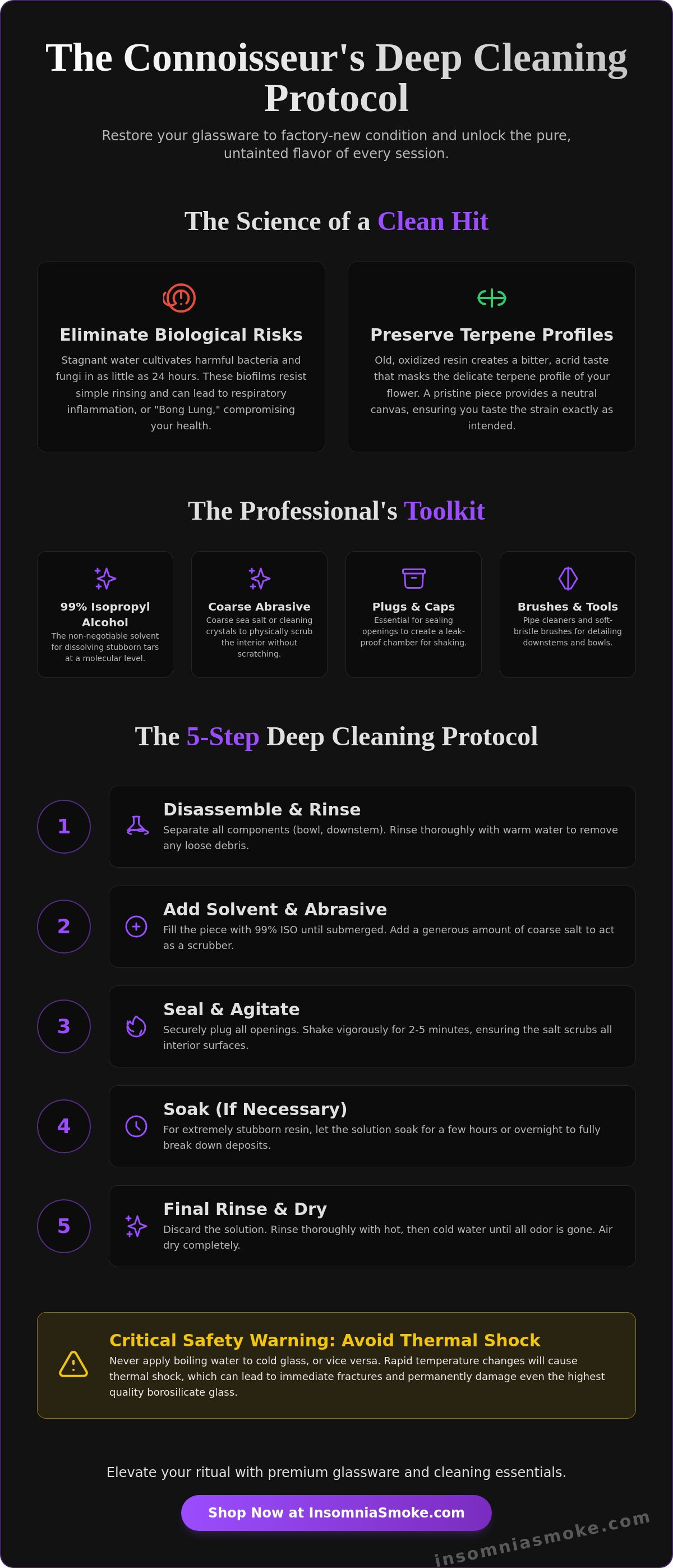
Den 5-trins dybderensningsprotokol
At udføre en professionel restaurering kræver tålmodighed og præcision. Mens mange overfladiske guider om hvordan man rengør din
Trin 1: Den Indledende Skylning. Begynd med at skylle hele stykket med varmt vand. Dette indledende trin fjerner løse rester og aske, hvilket forhindrer dit opløsningsmiddel i at blive mættet for tidligt. Trin 2: Opløsningsmiddel Blødgøring. Fyld kammeret med 99% isopropylalkohol. Lad det stå i mindst 45 minutter; denne varighed er afgørende for at trænge ind i de hærdede harpiksbindinger. Trin 3: Den Abrasive Agitation. Introducer dit grove havsalt for at skabe en skrubbeslam. Trin 4: Detaljearbejde. Behandl de aftagelige komponenter separat for at sikre, at ingen sprækker overses. Trin 5: Den Endelige Polering. Afslut med en grundig skylning med destilleret vand for at eliminere risikoen for kalkpletter eller mineralfilm.
Mestre Rysteteknikken
Effektiv agitation handler om kontrolleret kraft frem for hensynsløs hastighed.Sikre dit stykke ved hjælp af højkvalitets sili
Gendannelse af Skålen og Downstem
Mindre komponenter kræver en koncentreret tilgang for at fjerne genstridig kulstofopbygning. Placer din skål og downstem i separate lynlåsposer fyldt med en ISO og salt blanding. Denne metode sikrer total nedsænkning og giver dig mulighed for manuelt at manipulere saltet mod specifikke områder af harpiks. Efter en 30-minutters iblødsætning, brug en fleksibel børste eller piberenser til at rense de indre luftveje. Gendannelse af luftstrømsintegritet er afgørende for et glat, ubesværet sug. Når komponenterne er fri for al "reclaim," skyl dem grundigt og inspicér dem under stærkt lys for at sikre total gennemsigtighed. En ren downstem er fundamentet for et rent, uforfalsket hit.
Rengøring af Specialiseret Glas: Session Goods og Gravity Bonger
Designer glasvarer kræver en specialiseret tilgang, der går ud over standard bægerglas
Indviklede honeycomb perkolatorer og multi-kammer design udgør en unik udfordring for fysiske slibemidler. Fordi saltkrystaller ofte ikke kan passere gennem de små åbninger i en honeycomb skive, skal du stole mere på den kemiske opløsningsevne af din iblødsætning. Forlæng din iblødsætningstid til 60 minutter for disse dele. Dette tillader isopropylalkoholen at fuldt ud opløse harpiksen inden i perkolatorens porer uden behov for aggressiv rystning. Når harpiksen er opløst, vil en højtryksafskylning med varmt vand effektivt rense kamrene.
SiliKegle Pleje og Vedligeholdelse
En almindelig bekymring blandt entusiaster er, om alkohol vil beskadige integrerede sili
Gravity Bong Ventilvedligeholdelse
Den
Efter-rengøringsritualet: Polering, Luft og Opbevaring
Restaureringsprocessen afsluttes med en række raffinerede afsluttende detaljer, der løfter dit stykke fra blot vasket til professionelt kurateret. At fuldføre protokollen for hvordan man dybderenser en
Opnå en pletfri Shine
Postevand indeholder mineraler som calcium og magnesium, der efterlader grimme striber, når de tørrer. Brug en sidste skylning med destilleret vand for helt at fjerne disse aflejringer. Dette sikrer en krystalklar finish, der fremhæver håndværket af dit glas. Tør ydersiden med en mikrofiberklud af høj kvalitet for at forhindre fnugoverførsel eller mikroridser. Foretag en sidste inspektion under skarpt lys. Sørg for, at der ikke er saltkrystaller fanget i perkolatorerne, og at den skarpe lugt af isopropylalkohol er helt forsvundet. Et virkelig rent stykke bør ikke have nogen påviselig lugt, før det tages i brug igen.
Miljøoprydning
Lugten af brugt opløsningsmiddel og opløst harpiks er skarp og kan hænge i et arbejdsområde længe efter, at glasset er tørt.At håndtere denne miljøpåvirkning er afgørende for at opretholde et diskret og professionelt hjem. Brug
Korrekt opbevaring er den sidste beskyttelse for din restaurerede samling. Når dit stykke er helt tørt, skal det opbevares i et dedikeret miljø for at beskytte det mod støv og UV-eksponering. En
Bestem din rengøringsfrekvens baseret på dine brugsmønstre. En dedikeret entusiast bør udføre denne dybderengøringsprotokol hver en til to uger. Hyppig vedligeholdelse forhindrer "reclaim" i at binde sig for stærkt til borosilikatet, hvilket gør hver efterfølgende session lige så ren som den første. At mestre hvordan man dybderenser en
Forbedr dit ritual gennem ekspertvedligeholdelse
At opretholde en pletfri samling er kendetegnet for en sand entusiast.Ved at mestre hvordan man dybderenser en
Når du er klar til at udvide din samling eller opgradere dit udstyr, vælg en partner, der værdsætter ekspertise. Genopret dit ritual med vores kuraterede udvalg af
Ofte Stillede Spørgsmål
Hvor ofte skal jeg dybderense min Bong ?
Dybderens dit glasværk hver en til to uger, hvis du er en daglig bruger. Selvom det er en nødvendig vane at skifte dit vand dagligt, forhindrer det ikke den gradvise ophobning af harpiks og biofilm. Regelmæssig dybderensning sikrer, at disse aflejringer ikke binder sig permanent til borosilikatet. Lejlighedsvise brugere bør udføre en fuld restaurering efter hver session for at forhindre problemer med stillestående vand og opretholde smagens renhed.
Kan jeg bruge kogende vand til at rense mit glas Bong ?
Undgå at bruge kogende vand på koldt glas for at forhindre termisk chok. Hurtige temperaturændringer forårsager intern stress i materialet, hvilket kan føre til øjeblikkelige brud eller total strukturel svigt. Dette er især sandt for tykke, high-end stykker, hvor temperaturgradienten mellem de indre og ydre vægge kan være betydelig. Brug rumtempereret eller let varmt vand for at sikre din investerings levetid.
Er det sikkert at rengøre siliKegle Bong dele med isopropylalkohol?
Nej, du bør ikke bruge isopropylalkohol på sili
Hvordan fjerner jeg uklare hvide pletter fra mit glas?
Fjern uklare hvide pletter, også kendt som kalkpletter, ved at bruge en mild syre som hvid eddike eller citronsaft.Disse sure opløsninger opløser effektivt de calcium- og magnesiumaflejringer, der binder sig til glasoverfladen. Blødgør det berørte område i 30 minutter, før du skyller med destilleret vand. Dette enkle trin gendanner den boutique-niveau klarhed, som standard rengøringsmidler måske overser under en rutinemæssig restaurering.
Hvad er det bedste salt at bruge til rengøring af en Bong ?
Grov havsalt eller Epsom salt giver den bedste slibekraft til dybderengøring. De store, takkede krystaller opløses langsomt i alkohol med høj koncentration, hvilket gør det muligt for dem at fungere som en fysisk skrubber mod tung harpiks. Fint bordsalt er generelt for småt til at give den nødvendige friktion. Brug af det korrekte slibemiddel er en vigtig komponent i hvordan man dybderengør en
Kan jeg rengøre min Bong i opvaskemaskinen?
Opvaskemaskiner anbefales ikke til premium rygeapparater.Højtryksstråler og slibende rengøringsmidler kan ætse glasset over tid, og den intense varme udgør en risiko for sarte perkolatorer. Desuden kan harpiks tilstoppe din opvaskemaskines filtreringssystem og efterlade en vedvarende, ubehagelig lugt på dit køkkenudstyr. Hold dig til manuelle rengøringsmetoder for at sikre, at dit udstyr forbliver i fabriksny stand, og at dit køkken forbliver hygiejnisk.
Hvordan rengør jeg en Bong med en utilgængelig perkolator?
Brug en forlænget opløsningsmiddelblødning til at håndtere interne perkolatorer, som børster ikke kan nå. Fyld kammeret med 99% isopropylalkohol og lad det stå i mindst 60 minutter for fuldt ud at opløse harpiksen. Denne kemiske tilgang er den mest effektive måde at forstå hvordan man dybderenser en
Hvad skal jeg gøre, hvis min downstem sidder fast inde i Bong ?
Anvend forsigtigt varme eller et smøremiddel for sikkert at løsne en fastsiddende downstem. Brug en hårtørrer på lav indstilling til at varme

